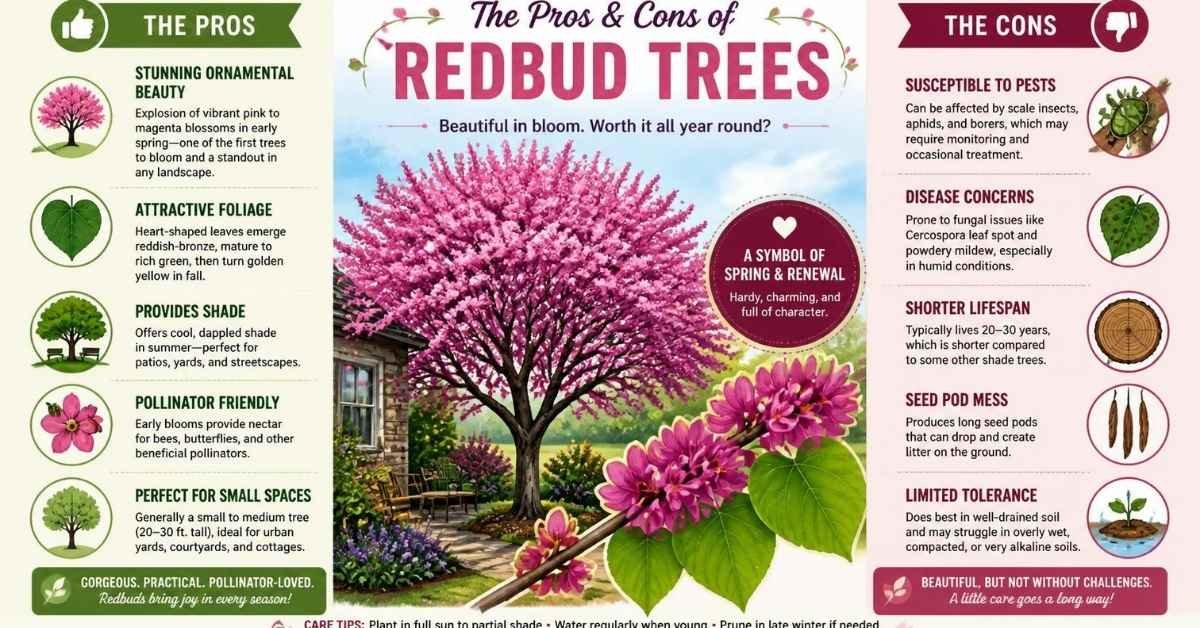
Will a weeping redbud fit my yard? Will it bloom, or just sit there looking sad?Yes, a weeping redbud tree fits most small yards. Most varieties stay between 5 and 10 feet tall, grow in USDA zones 5 to 9, and cover themselves in pink-purple flowers every spring.
This guide covers the best varieties, planting, pruning, problems, and seasonal care. You’ll also see how it stacks up against the standard Eastern redbud.
Quick Answer: Is A Weeping Redbud A Good Tree For Small Yards?
Yes.
Popular weeping types like Ruby Falls and Lavender Twist stay compact, usually 5 to 10 feet tall and 5 to 8 feet wide.
They need little pruning, handle full sun to part shade, and work as a specimen tree near a patio, front walk, or entry.
The trade-off is a shorter lifespan, usually 20 to 30 years, and a few disease risks we’ll cover below.
What Is A Weeping Redbud Tree?
A weeping redbud is a dwarf form of Cercis canadensis, the native Eastern redbud.
Breeders selected it for cascading branches that droop toward the ground like a green waterfall.
In early spring, pea-like flowers open along bare stems before the leaves show up.
Then come heart-shaped leaves, summer shade, and a sculptural winter shape.
Types Of Redbud Trees
Redbuds belong to the genus Cercis.
Knowing the main species helps you pick the right tree for your climate.
Eastern Redbud
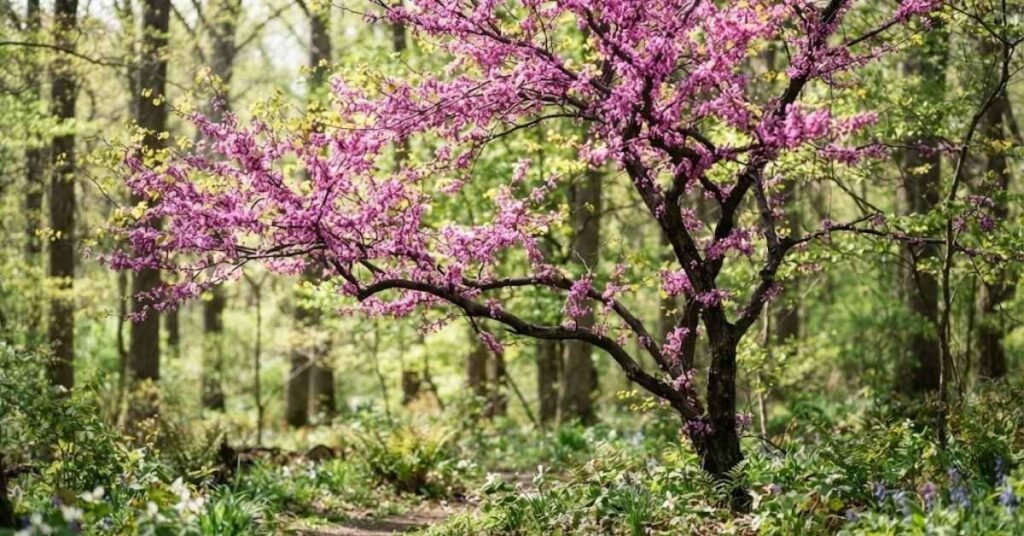
Cercis canadensis is the most common type.
It grows 20 to 25 feet tall and wide and is the parent of most weeping cultivars.
Western Redbud
Cercis occidentalis is native to the West Coast.
It’s more drought tolerant and often grows as a multi-stemmed large shrub.
Texas Redbud
This is a Eastern redbud variety with glossy, thicker leaves.
It handles heat and dry spells better than the northern forms.
Mexican Redbud
Another heat-tolerant Eastern variety, with wavy-edged leaves.
It suits hot, dry regions in the south.
Chinese Redbud
Cercis chinensis often grows as a shrub with clustered flowers right on the stems.
The ‘Don Egolf’ cultivar is known for good canker tolerance.
Judas Tree
Cercis siliquastrum comes from the Mediterranean region.
It has the same heart-shaped leaves and flowers that bloom straight from the trunk.
Popular Redbud Cultivars
Cultivars are selected forms with set traits like leaf color or flower type.
Here are the ones gardeners ask about most.
Forest Pansy
Known for deep burgundy leaves that fade to green-purple in summer.
It grows much larger than weeping types.
Ruby Falls
A weeping form with purple-maroon leaves and lavender-pink flowers.
We’ll cover it in detail below.
Hearts Of Gold
Golden-yellow leaves on an upright tree.
Give it afternoon shade so the foliage doesn’t scorch.
Carolina Sweetheart
A variegated redbud with pink, cream, and green leaves.
It’s a good pick if you want color all season.
Pink Pom Poms
A cultivar known for double, ruffled pink flowers.
It looks fuller in bloom than single-flowered types.
Oklahoma Redbud
A Texas-type redbud with glossy leaves that handles heat and drought well.
It’s a strong choice for southern and plains gardens.
Avondale Redbud
A compact, shrubby Chinese redbud with heavy bloom.
It stays smaller than most upright redbuds.
Compact And Weeping Redbuds
If space is tight, look at the weeping group first.
Lavender Twist (5 to 6 feet) and Ruby Falls (6 to 8 feet) are the smallest popular choices.
Avondale and other shrubby Chinese types are compact too, but they grow upright.
Weeping types give you the dramatic droop that makes people stop and look.
Redbud Fall Color And Winter Look
Fall color is soft, not fiery.
Expect yellow, with hints of gold or orange depending on the variety.
In winter the leaves drop and the branch structure takes over.
The twisted, weeping stems look great against snow, and brown seed pods often hang on through the cold months.
Best Redbud Type By Garden Needs
| Garden need | Best pick |
| Tiny yard or patio | Lavender Twist |
| Dark purple foliage | Ruby Falls or Forest Pansy |
| Hot, dry climate | Texas, Mexican, or Oklahoma redbud |
| Gold or variegated leaves | Hearts Of Gold or Carolina Sweetheart |
| Big shade tree effect | Standard Eastern redbud |
| Showy double flowers | Pink Pom Poms |
Weeping Redbud Vs Standard Eastern Redbud
The standard Eastern redbud reaches 20 to 25 feet in height and width.
A weeping redbud stays at roughly a quarter of that size.
Standard types give you shade and a classic layered shape.
Weeping types give you a small, sculptural accent that’s easier to manage and prune.
Quick Care Summary
| Care factor | What it needs |
| Zones | 5 to 9 |
| Sun | Full sun to part shade |
| Soil | Moist, well-drained soil with organic matter |
| Water | Once or twice weekly in year one |
| Mulch | 2 to 4 inches, kept off the trunk |
| Pruning | Right after flowering |
| Fertilizer | Slow-release, early spring |
Weeping Redbud Size, Redbud Height, And Growth Rate
Most weeping redbuds reach 5 to 10 feet tall at maturity.
Growth rate is moderate, and young trees often add a foot or so a year.
Height depends heavily on training.
Stake a leader upright and the tree grows taller, then the branches weep from there.
How Wide Does A Weeping Redbud Spread?
Ruby Falls usually spreads 5 to 6 feet.
Lavender Twist often spreads 6 to 8 feet, and left alone it can sprawl wider than it is tall.
Plan for about 8 feet of clear space around the tree.
That gives the branches room to drape without hitting walkways or lawn mowers.
Best Weeping Redbud Varieties
Two names dominate the category.
Both are cultivars of Eastern redbud and both are cold hardy.
Ruby Falls Redbud
Ruby Falls has purple-maroon leaves in spring that turn green with purple hints in summer.
Flowers are lavender-pink, and fall color is yellow.
It typically reaches 6 to 8 feet tall and 5 to 6 feet wide.
It’s a great pick if you want dark foliage against a light wall or fence.
Lavender Twist Redbud
Lavender Twist was found in a New York garden in 1991 by Connie Covey, which is why it’s also sold as ‘Covey’.
It has glossy green leaves, twisted trunks, and pink-purple flowers.
Because it goes dormant early, it’s considered more cold hardy.
Left alone it stays short and contorted, and staked it can climb much higher.
Lavender Twist Vs Ruby Falls Redbud
| Feature | Lavender Twist | Ruby Falls |
| Spring leaves | Green | Purple-maroon |
| Typical height | 5 to 6 feet (more if staked) | 6 to 8 feet |
| Typical spread | 6 to 8 feet | 5 to 6 feet |
| Trunk | Twisted, contorted | Smoother, more even |
| Fall color | Yellow | Yellow |
| Zones | 5 to 9 | 5 to 9 |
Choose Lavender Twist for quirky shape and fresh green foliage.
Choose Ruby Falls for dark leaves and a tidier weep.
Weeping Redbud Colors: Flowers, Leaves, And Fall Color
Flowers range from soft pink to magenta and lavender-purple.
Leaves can be green, burgundy, gold, or variegated depending on the cultivar.
Fall color runs from yellow to orange and gold.
Don’t expect red, since that isn’t what this tree is known for.
Why Are Some Redbud Trees Purple?
Purple-leaf types like Ruby Falls and Forest Pansy carry extra anthocyanin pigments.
Those are the same compounds that color red cabbage and purple plums.
The color is strongest in spring and fades toward green in summer heat.
More sun usually means deeper color.
Are Redbud Flowers Red, Pink Or Purple?
Mostly pink to purple, not true red.
The name likely comes from the deeper magenta flower buds that look reddish before opening.
Where To Plant A Weeping Redbud?
Pick a spot with full sun to part shade.
In hot climates, afternoon shade helps prevent leaf scorch.
Give it a visible home like a front yard corner, a patio edge, or beside a path.
Good drainage matters more than anything else.
Is It Ok To Plant A Weeping Redbud In A Residential Zone?
Yes, it’s a small ornamental tree and fits most residential lots.
Still, check HOA rules, utility lines, and your local planting setbacks before you dig.
Are Weeping Redbud Roots Invasive?
No.
Redbuds develop a deep taproot, not aggressive surface roots, though you should still keep the tree several feet from foundations, drains, and pipes.
Sunlight, Soil, And Water Needs
Redbuds are adaptable, but they hate soggy feet.
Wet soil raises the risk of root problems and verticillium wilt.
A 2 to 4 inch layer of mulch keeps roots cool and holds moisture.
Pull it back a few inches from the trunk so bark doesn’t rot.
How Much Water Does A Weeping Redbud Need?
Water once or twice a week during the first year.
Check the soil 3 inches down, and water when it feels dry.
After the first year, the tree handles dry spells well.
Give it a deep weekly soak during long droughts.
Best Soil For A Weeping Redbud
Loamy, well-drained soil rich in organic matter is ideal.
It tolerates clay if water doesn’t pool, and it handles a wide range of pH.
How To Plant A Redbud Tree?
- Choose a spot with the right light and space.
- Dig a hole about three times as wide as the root ball and just as deep.
- Set the tree so the top of the root ball sits level with the soil.
- Backfill, firm gently, and water deeply.
- Add mulch and stake only if you want to train height.
Redbuds don’t transplant well because of the taproot.
Plant young trees and don’t move them later.
Can Weeping Redbud Grow In Pots?
Yes, in the right zones.
Lavender Twist can live in a container in zones 7 to 9, but in zones 5 and 6 the roots lack enough winter insulation.
Pick a large pot with drainage holes.
Water more often than you would in the ground.
Pruning And Staking A Weeping Redbud
Weeping redbuds need very little pruning.
Prune right after flowering, because pruning in winter can remove flower buds.
Stake the leader while the tree is young if you want extra height.
Use soft tape so it doesn’t cut into the bark.
How To Prune A Weeping Redbud Tree?
- Wait until the flowers fade.
- Remove dead, damaged, and crossing branches.
- Trim wayward shoots to keep the weeping shape.
- Avoid heavy cuts that remove the natural cascade.
Why Is My Redbud Growing Upright?
Upright shoots usually mean the tree is reverting or the leader is growing straight.
If the tree is grafted, shoots below the graft union come from the rootstock and should be removed.
Bloom Time And Winter Interest
Weeping redbuds bloom in early spring, usually for 3 to 4 weeks.
Flowers show up before the leaves and cover branches and trunk.
In winter, the pendulous stems and persistent seed pods add shape and texture.
It’s one of the few small trees that looks good in all four seasons.
Why A Weeping Redbud Is Not Blooming?
Common causes include:
- Too much shade
- Winter pruning that removed flower buds
- A late frost that killed the buds
- Too much nitrogen fertilizer
- A very young tree that hasn’t matured yet
Fix the light, skip winter cuts, and be patient.
Common Redbud Tree Problems, Diseases, And Pests
Redbuds are tough but not perfect.
The big two are canker (caused by Botryosphaeria fungus) and verticillium wilt.
Other issues include leaf spot, scale insects, borers, and webworms.
Stressed trees get hit hardest, so good watering and clean pruning cuts matter.
Why Is My Weeping Redbud Dying?
Check for branch dieback, wilting leaves, and sunken or dark patches on bark.
Those point to canker or verticillium wilt.
There’s no cure for verticillium wilt.
Remove dead wood, improve drainage, and don’t replant a susceptible tree in the same soil.
Pros And Cons Of Redbud Trees
Pros:
- Compact size and a unique weeping shape
- Stunning spring bloom
- Low maintenance once established
- Good for bees, butterflies, and hummingbirds
- Interesting winter structure
Cons:
- Moderate lifespan of 20 to 30 years
- Susceptible to canker and verticillium wilt
- Doesn’t transplant well
- Wood can be weak
Is Weeping Redbud Messy?
Only a little.
Seed pods and leaves drop, but a small tree means a small cleanup.
How Long Do Weeping Redbud Trees Live?
Most live 20 to 30 years.
Good drainage, mulch, and care can help them reach the longer end.
Wildlife, Deer Resistance, And Pet Safety
Flowers feed early bees, butterflies, and hummingbirds.
Birds and squirrels may eat the seeds.
Redbuds are generally not favored by deer, though hungry deer can nibble young trees.
Sources list no known toxicity to dogs, cats, or horses, but ask your vet if your pet chews plants.
Buying Checklist For A Healthy Weeping Redbud
- Straight, healthy trunk with no sunken spots
- Clean bark with no cracks or oozing
- Well-formed canopy and plenty of buds
- Roots that fill the pot but aren’t circling
- A named cultivar tag such as Ruby Falls or Lavender Twist
- A cold hardiness rating that matches your zone
Can You Grow A Weeping Redbud From Seed Or Cuttings?
You can grow redbud from seed, but seedlings won’t copy the weeping form.
Named cultivars are usually grafted or budded, so buy a nursery tree instead.
Best Time To Buy And Plant
Spring is the safest planting time in cold zones.
In mild climates, early fall also works well.
Redbud Tree Care: Seasonal Care
- Spring: Apply slow-release fertilizer before bloom, then prune after flowers fade.
- Summer: Water during dry spells and watch for pests.
- Fall: Rake leaves, refresh mulch, and water if it’s dry.
- Winter: Protect young trunks in exposed spots and avoid heavy pruning.
Common Mistakes To Avoid
- Planting in soggy, poorly drained soil
- Pruning in winter and losing flowers
- Piling mulch against the trunk
- Overwatering after the first year
- Moving an older tree and damaging the taproot
- Ignoring cankers on dying branches
Conclusion
A weeping redbud gives small yards big spring color and a graceful shape. Pick Ruby Falls for dark leaves or Lavender Twist for green leaves and a twisted trunk, plant in well-drained soil, and prune only after bloom.
Have you grown a weeping redbud? Drop a comment with your tips, and share this guide with a friend who’s shopping for a small tree.
FAQs
How Tall Does A Weeping Redbud Tree Get?
Most reach 5 to 10 feet tall. Staking the leader can add height.
Is The Weeping Redbud Fast Growing?
No, growth is moderate. Expect about a foot a year when young.
How To Grow Weeping Redbud?
Plant it in well-drained soil in full sun to part shade. Water often in year one and prune after flowering.
Where Is The Best Place To Plant A Redbud Tree?
Choose a sunny or part-shade spot with good drainage. Give it room to spread.
Where Should You Plant A Weeping Redbud Tree?
Near a patio, entry, or walkway where the weeping shape shows. Keep it a few feet from structures.
Does Weeping Redbud Need Full Sun?
It grows in full sun to part shade. Afternoon shade helps in hot climates.
What Is The Best Weeping Redbud Variety?
Ruby Falls and Lavender Twist are the top picks. Choose Ruby Falls for purple leaves and Lavender Twist for green leaves.
What Colors Do Weeping Redbuds Come In?
Flowers are pink to lavender-purple. Leaves are green or deep purple depending on the variety.
Are Redbud Flowers Red Or Pink?
They’re pink to purple, with deeper magenta buds. They aren’t truly red.
Can Weeping Redbud Tolerate Shade?
Yes, part shade is fine. Too much shade reduces flowering.
What is the difference between Ruby Falls and Lavender Twist redbud?
Ruby Falls has purple spring leaves and a tidier weep. Lavender Twist has green leaves and a twisted trunk.
Why are redbud trees purple?
Anthocyanin pigments color the leaves and flowers. The color fades toward green in summer.
Are Weeping Redbud Roots Invasive?
No, they grow a taproot rather than aggressive surface roots. Still plant a few feet from pipes and foundations.
When Does Weeping Redbud Bloom?
In early spring before leaves appear. Bloom lasts about 3 to 4 weeks.
How Do You Prune A Weeping Redbud?
Prune right after flowering to remove dead or crossing branches. Avoid heavy cuts and winter pruning.
What Zones Do Weeping Redbuds Grow In?
USDA zones 5 to 9. Check the exact cultivar for your area.
Is Weeping Redbud Toxic To Dogs Or Cats?
Sources list no known toxicity. Ask your vet if your pet chews on plants.
Can You Grow A Weeping Redbud From Seed?
You can, but seedlings won’t be weeping copies of the parent. Buy a grafted nursery tree for the true form.
What Is The Smallest Redbud Tree?
Lavender Twist is one of the smallest, often 5 to 6 feet tall. Ruby Falls is close behind.
Do Weeping Redbuds Lose Leaves In Winter?
Yes, they’re deciduous. The weeping branches stay interesting all winter.
Is Lavender Twist Redbud Deer Resistant?
Redbuds are generally not favored by deer. Protect young trees until they’re established.

Jack Danniel is a flower enthusiast, writer, and experienced SEO expert passionate about creating helpful content.
With years of experience in SEO and content strategy, he shares engaging and informative insights about flowers.
His goal is to make floral information easy to understand while helping readers discover the beauty of nature.