You just walked past a plant shop and a thought hit you. Will this actually bring me luck, or is it just a nice leafy decoration?
Fair question. Most people buying their first feng shui plant ask the same thing.
This guide answers it in plain terms, room by room, goal by goal, without the mystical jargon that makes half these articles unreadable.
Quick Answer: Best Feng Shui Plants For Home
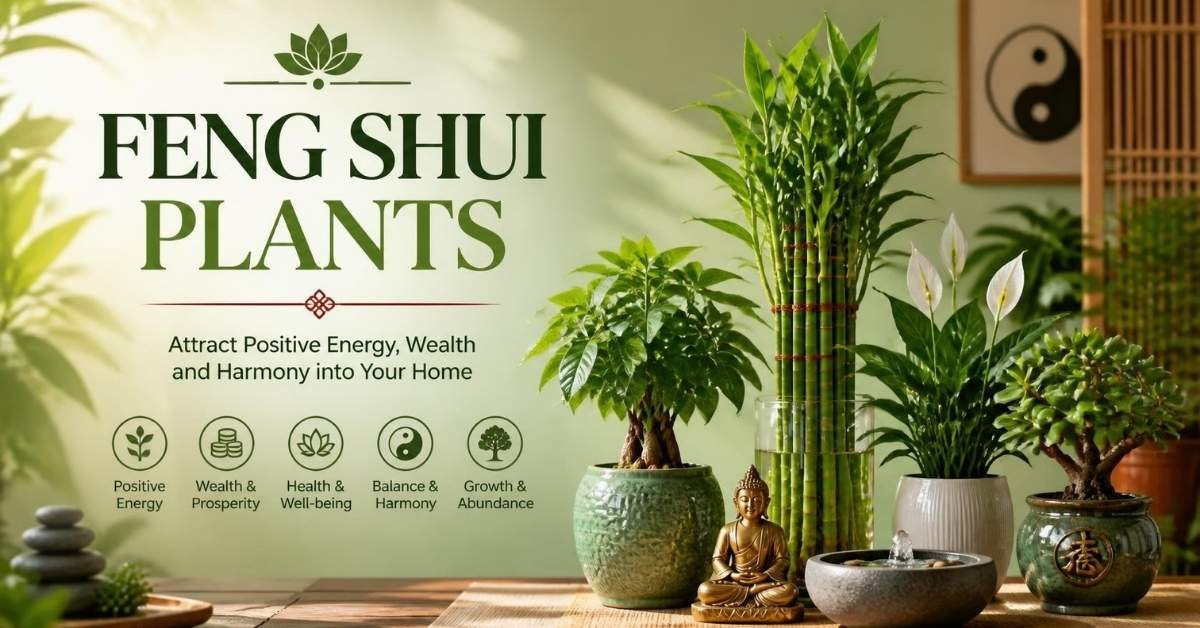
If you only remember three names, make it these: Money Tree, Jade Plant, and Lucky Bamboo. All three are tied to wealth symbolism and prosperity, and all three are easy enough for a total beginner to keep alive.
For calm and positive energy in living spaces, add a Peace Lily or a Snake Plant. They handle low light well and don’t demand much fuss.
Want something for the office desk that won’t die from neglect? A small ZZ Plant or Golden Pothos on your desk corner does the job without any daily babysitting.
What Are Feng Shui Plants?
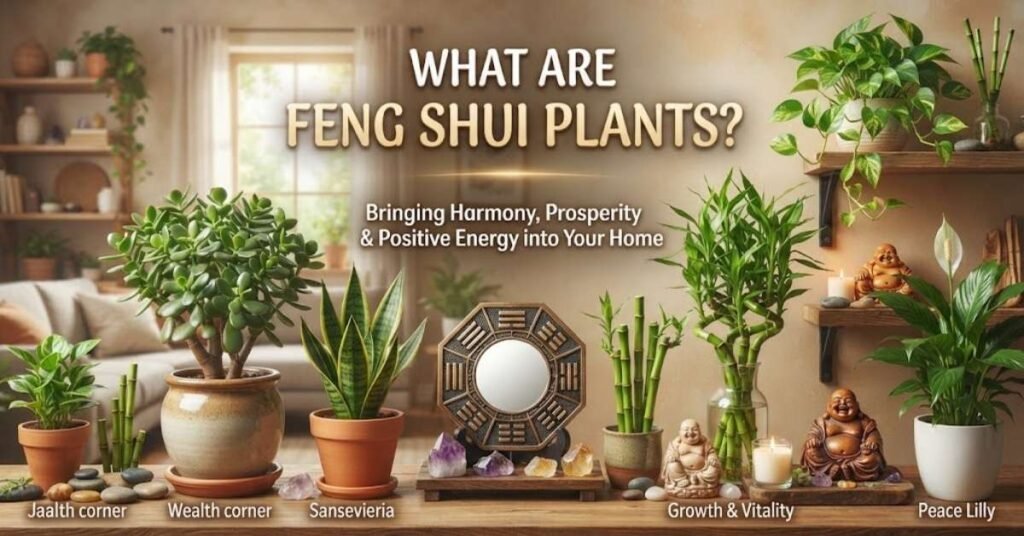
Feng shui plants are living plants chosen for their shape, growth pattern, and the energy they’re believed to carry in Chinese tradition. Think of feng shui as an old system for arranging your space so energy, or chi, flows smoothly instead of getting stuck in corners.
Plants fit into this because they’re alive. They grow, they breathe, they respond to light. That’s exactly why they’re linked to renewal and growth in a way that a painting or a lamp never could be.
It’s worth being upfront here: this is a belief system rooted in centuries of Chinese tradition, not a scientifically tested claim. Millions of people find real value and calm in practicing it, and that’s reason enough to give it a fair shot.
What Makes A Plant Good For Feng Shui?
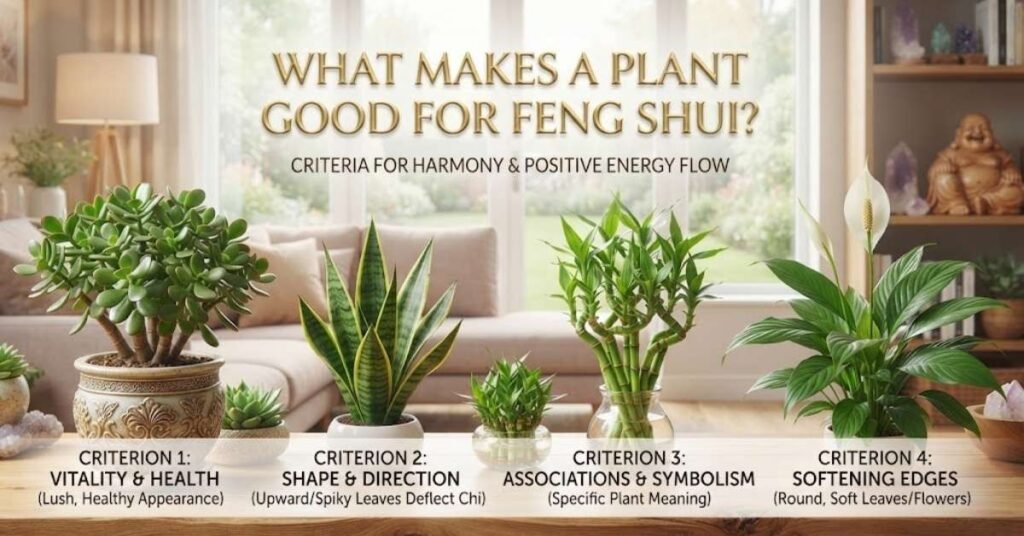
Round or heart-shaped leaves are the classic sign of a lucky plant. Sharp, pointy leaves are said to send cutting energy into a room, which is why cactus and thorny plants get side eyed in feng shui circles.
Upright growth matters too. A plant that stands tall and healthy signals strength and stability. One that’s drooping or yellowing does the opposite, even if you don’t consciously notice it.
Healthy, green leaves without dust or damage are non negotiable. A neglected plant with dry leaves isn’t attracting anything except maybe a bit of guilt every time you walk by it.
35 Feng Shui Plants At A Glance
Here’s a fast reference list you can bookmark:
| Plant | Meaning |
| Money Tree | wealth, stability |
| Jade Plant | prosperity |
| Lucky Bamboo | luck, growth |
| Golden Pothos | easy growth, wealth |
| Chinese Money Plant | coin shaped luck |
| Peace Lily | calm |
| Snake Plant | protection |
| Rubber Plant | abundance |
| Areca Palm | positive energy |
| Orchid | love, refinement |
| Philodendron Heartleaf | affection |
| Monstera | growth |
| Aloe Vera | healing |
| Boston Fern | harmony |
| Spider Plant | protection |
| ZZ Plant | resilience |
| Ficus Tree | grounding |
| Citrus Tree | abundance |
| Lemon Tree | freshness |
| Basil | prosperity |
| Rosemary | clarity |
| Lavender | peace |
| Jasmine | romance |
| Calathea | balance |
| Rattlesnake Plant | protection |
| String of Hearts | love |
| Anthurium | hospitality |
| Bird of Paradise | confidence |
| Dwarf Umbrella Tree | protection |
| Air Plant | purity |
| Chrysanthemum | joy |
| Camellia | admiration |
| Tulsi | spiritual protection |
| English Ivy | protection (outdoors) |
| False Shamrock | luck |
Best Feng Shui By Goal
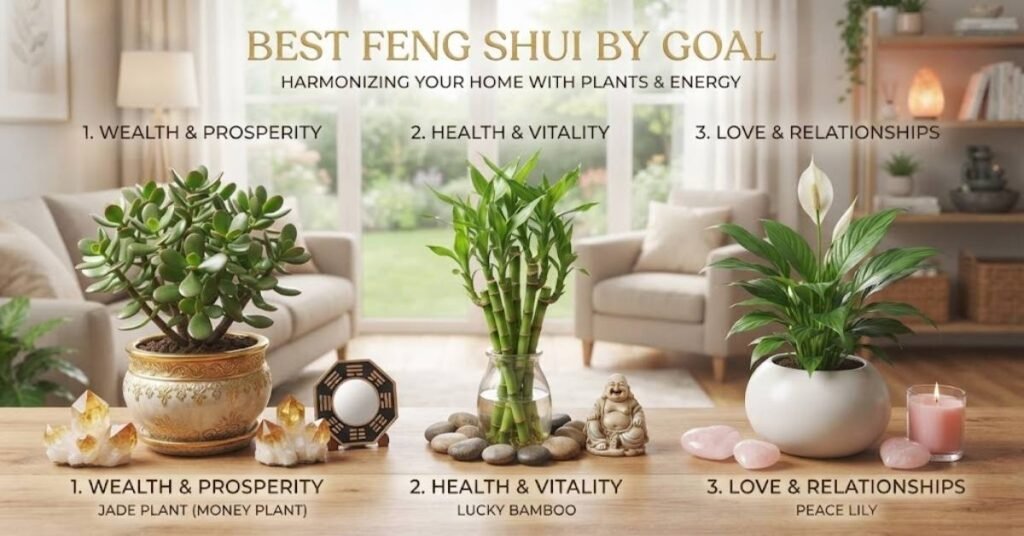
Chasing a specific outcome? Match the plant to the goal instead of picking randomly.
For money attracting plants, go with Jade, Money Tree, or Chinese Money Plant. For relationship symbolism and love, Philodendron Heartleaf and String of Hearts carry that meaning through their leaf shape.
If focus and career growth are the priority, keep something structured and upright on your desk, like a ZZ Plant or small Bamboo arrangement. Business luck plants tend to favor coin shaped or upright forms over soft, drooping ones.
Common Money Plant Confusion
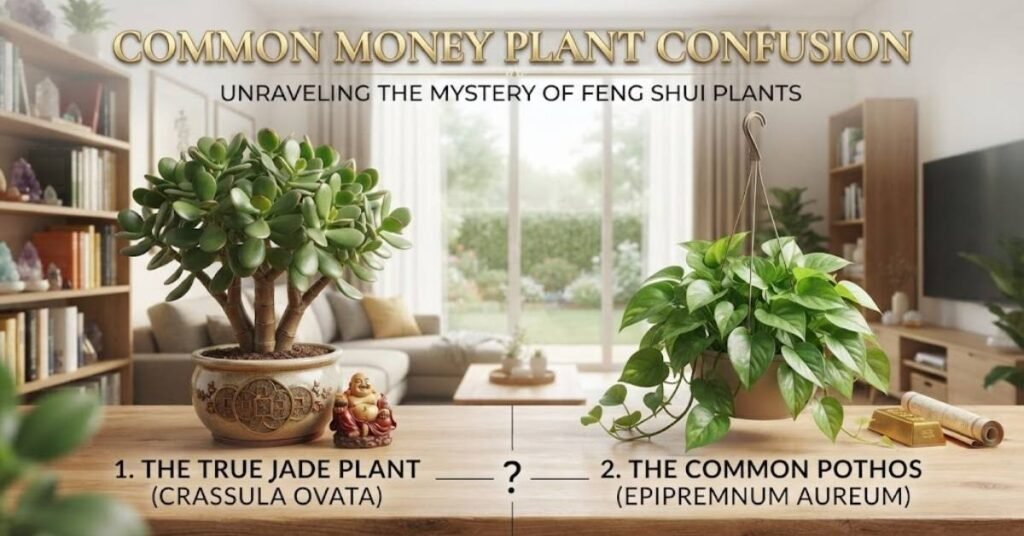
Here’s where a lot of people trip up. “Money Plant” gets used for at least three different species, and they’re not interchangeable.
In many households, Pilea peperomioides (Chinese Money Plant) gets the name because of its round, coin shaped leaves. In others, Jade Plant wears the same title for the same reason. Then there’s Golden Pothos, sometimes sold under the same label in nurseries.
None of this is wrong exactly, it’s just regional naming that got tangled over decades. If you’re buying online, check the botanical name before checkout so you get the plant you actually pictured.
Money Attracting Plants
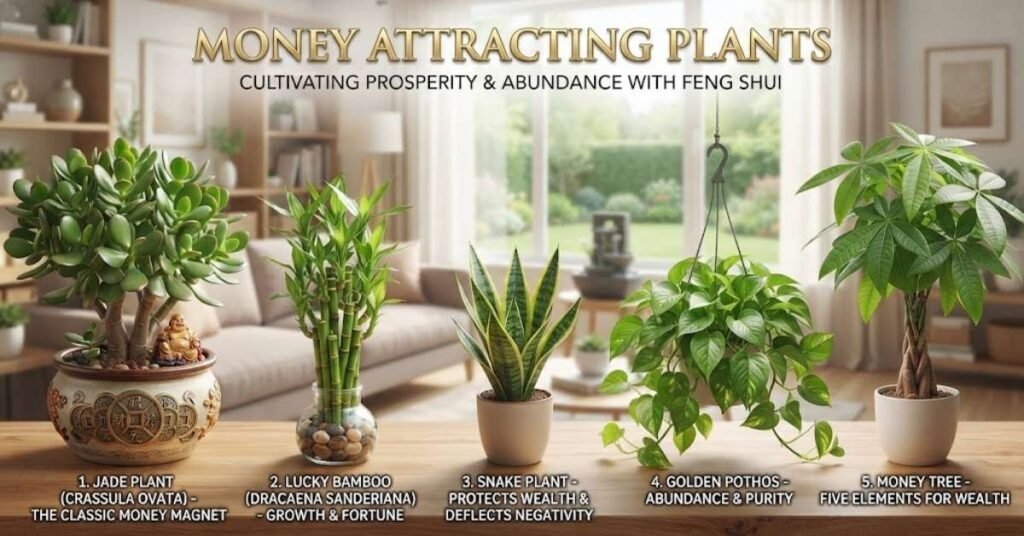
Jade Plant sits at the top of most lists here, often placed near the entrance or in the wealth corner, which in bagua terms is the southeast area of a home. Money Tree, with its braided trunk, is the other heavyweight, frequently gifted at business openings for exactly this reason.
Lucky Bamboo rounds out the trio, and its stalk count changes the meaning, more on that later. All three share round or upright forms, which feng shui ties directly to abundance.
Keep these plants clean, watered on schedule, and in a spot where you’ll actually notice them daily. A wealth plant shoved behind furniture isn’t doing much for anyone.
Plants That Bring Positive Energy
Peace Lily is the classic pick for softening a room’s mood, especially in spaces that feel heavy or cluttered. Areca Palm brings a similar lift, plus it fills a room nicely without overwhelming it.
Lavender and Jasmine work through fragrance as much as form. Scent plays a real role in how a room feels, and a faint floral note does more for calm than most people give it credit for.
If your home feels stagnant, start small. One healthy plant in a living room corner can shift the whole mood of that space within a few weeks.
Feng Shui Plant Placement
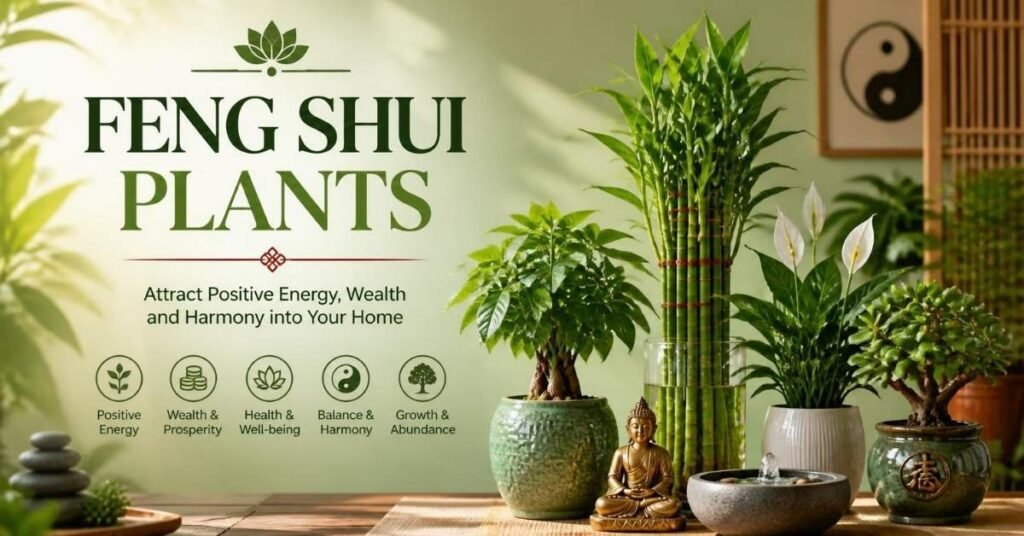
Placement matters as much as plant choice, maybe more. The general rule is this: plants in the wealth area (southeast), health area (east), and relationship area support those specific parts of life.
Avoid blocking a doorway with anything oversized. Energy needs room to move, and a plant crowding an entrance does the opposite of what it’s meant to do.
Corners that feel empty or dead are good candidates for a tall plant like a Ficus or Dwarf Umbrella Tree. It fills the space and, in feng shui terms, keeps energy from stagnating there.
Room By Room Feng Shui Plant Guide
Different rooms call for different energy. A bedroom wants calm, an office wants focus, a kitchen wants freshness. Matching plant to room isn’t just tradition, it’s common sense too.
Below, we’ll go room by room so you’re not guessing what goes where.
Lucky Plants For Home
For the living room, Money Tree and Areca Palm are safe, popular choices that also look good in most decor styles. The kitchen does well with herbs like Basil and Rosemary, useful and lucky at the same time.
Dining room plants should feel abundant rather than sparse, think Rubber Plant or a full, healthy Pothos trailing from a shelf. In the bathroom, Boston Fern and Spider Plant tolerate humidity well and add a bit of green where rooms often feel sterile.
Feng Shui Plants For Bedroom
Bedrooms are tricky in feng shui because too much active energy disrupts sleep. Peace Lily, Snake Plant, and Lavender are the safer picks here, all associated with calm rather than stimulation.
Best Bedroom Plant Placements
Keep plants away from the immediate side of the bed where you sleep. A side table across the room or a windowsill works better than a nightstand crowded with a large pot.
Bedroom Plants To Use Carefully
Skip Bamboo varieties with sharp, pointed leaves in the bedroom, along with anything thorny. Large, dramatic plants like an oversized Monstera can also feel too “loud” for a room meant for rest.
Feng Shui Plants For Office
Offices need focus, clarity, and a bit of ambition in the air. ZZ Plant, Snake Plant, and Golden Pothos handle low light conditions typical of most workspaces while still carrying strong symbolism.
Best Office Plant Placement
The desk corner to your left as you sit down is considered a strong spot for a small lucky plant. Avoid placing anything directly behind your back at your desk, since that’s said to leave you feeling unsupported.
Lucky Plants For Office Desk
Small pots work best here. A mini Jade Plant, a short Lucky Bamboo arrangement, or a compact Pothos cutting in water all fit a desk without taking over your workspace.
Lucky Bamboo Stalk Meanings
Stalk count changes what the arrangement represents. Three stalks are tied to happiness, wealth, and longevity. Five stalks cover the five elements of wealth. Eight stalks relate to growth, and a full nine stalk arrangement is considered the luckiest of all, since nine is viewed as a complete, powerful number.
Plants For Business Reception Areas
Bird of Paradise and full, healthy Ficus Trees make a strong first impression in a reception area. Bigger, more architectural plants suit a space meant to project stability to visitors.
Feng Shui Front Door Plants
Your front door is the main entry point for energy according to feng shui, so plants here should feel welcoming, not obstructive. Jasmine, potted citrus trees, or a pair of matching plants flanking the entrance are common choices.
Avoid thorny plants like cactus right by the entrance. The idea is to invite energy in smoothly, not greet it with spikes.
Keep the front path clear too. Overgrown plants spilling across a walkway do the opposite of the protective, welcoming effect you’re going for.
Feng Shui Outdoor Plants
Outdoor spaces get their own set of rules, since sunlight, wind, and weather play a bigger role outside than in.
Outdoor Plants That Bring Money And Good Luck
Money Tree and citrus trees do well outdoors in warmer climates, and a fruiting Lemon Tree near a front garden is considered a strong symbol of abundance.
Balcony And Patio Plant Placement
On a balcony or patio, group plants rather than scattering single pots. A cluster near a sunny porch corner creates a stronger visual and energetic presence than isolated plants spread thin.
Feng Shui Garden Plants
Chrysanthemum and Camellia are classic garden choices tied to joy and admiration. Rotate seasonal flowers near the entrance path to keep that entry zone feeling alive year round.
Indoor Feng Shui Plants
Indoors, bright indirect light near a window suits most lucky plants best. Monstera, Rubber Plant, and Philodendron all thrive in this kind of setup and double as strong statement pieces in a living room or hallway.
For darker interior corners, ZZ Plant and Snake Plant are the two most forgiving options, tolerating low light without losing their form.
Plants To Avoid Or Use Carefully In Feng Shui
Cactus and other thorny plants top this list, associated with sharp or defensive energy rather than welcoming warmth. Bonsai, while beautiful, is sometimes avoided by strict practitioners since its stunted growth is seen as restrictive rather than expansive.
Dried plants and dead flowers should never linger in a home. Once a plant dies, replace it rather than leaving it as decor, since stagnant, decaying matter is considered a magnet for stale energy.
Fake plants are debated. Good quality artificial plants are generally seen as neutral, better than nothing, but they don’t carry the same living energy as real greenery.
Feng Shui Plant Care Rules
A wilting, dusty plant undercuts whatever symbolism it’s supposed to carry. Watering routine, drainage, and regular dusting matter more than people expect.
Check leaves weekly for yellowing or damage, and remove dead leaves promptly. Repotting every year or two keeps roots from getting cramped, which shows up as weak, slow growth if ignored.
Rotate plants occasionally so all sides get natural light. A plant leaning hard toward one window isn’t just awkward looking, it’s a sign of uneven energy in feng shui terms too.
Feng Shui And Pet Safety
Not every lucky plant is safe around cats and dogs. Jade Plant, Aloe Vera, and English Ivy can cause issues if chewed, so keep them on a high shelf or skip them entirely in pet heavy homes.
Spider Plant, Areca Palm, and Boston Fern are generally considered pet friendly and still carry solid feng shui symbolism. If you’re ever unsure, a quick call to your veterinarian or a poison helpline beats guessing.
Best Feng Shui By Need
Best For Beginners
Snake Plant and ZZ Plant survive almost any level of neglect, making them ideal starter picks for anyone new to plant care.
Best For Low Light
Pothos, ZZ Plant, and Peace Lily all tolerate dim corners far better than most flowering varieties.
Best For Small Apartments
Chinese Money Plant and small Bamboo arrangements fit tight spaces without overwhelming a small apartment layout.
Best For Pet Conscious Homes
Spider Plant, Areca Palm, and Calathea combine safety with strong symbolic meaning.
Best For Renters
Portable pots like Pothos and Peace Lily move easily between apartments without needing permanent fixtures.
Best For Busy Homes
ZZ Plant and Snake Plant again lead here, surviving missed watering weeks without complaint.
Common Mistakes With Feng Shui
Plant clutter is the biggest one. Cramming too many pots into one corner creates visual chaos rather than balanced energy. Fewer, healthier plants beat a crowded shelf every time.
Cracked pots, dead planters, and overwatering all undercut good intentions. A struggling plant sends the opposite signal of what feng shui aims for, no matter how “lucky” the species is on paper.
Blocking a doorway with an oversized plant, or letting one grow wild and thorny, are the two mistakes even experienced practitioners fall into occasionally.
How To Choose The Right Feng Shui Plant
Start with your goal, wealth, calm, focus, or protection, then match the plant list above to that goal. Factor in your actual light conditions and how much care you can realistically give.
There’s no point buying a light hungry Citrus Tree for a north facing apartment with one small window. Pick something that will thrive in your real conditions, not your ideal ones.
Conclusion
Feng shui plants aren’t magic, but they’re not nothing either. A home filled with healthy, well placed greenery tends to feel calmer, more alive, and more welcoming, and that shift in feeling is worth something on its own.
Start with one or two plants from this list, place them thoughtfully, and keep them healthy. That’s really the whole formula.
FAQ’s
Which Plant Is Best For Feng Shui At Home?
Jade Plant and Money Tree are the two most widely recommended for general home use.
Where Should Feng Shui Plants Be Placed?
Near entrances, in the southeast wealth corner, or in any dull, energy stagnant corner of a room.
Which Plant Brings Money And Luck?
Jade Plant, Money Tree, and Lucky Bamboo are the top three tied to wealth symbolism.
Are Plants Good For Feng Shui?
Yes, living plants are considered strong carriers of chi due to their growth and vitality.
What Plants Should Not Be Kept At Home Feng Shui?
Cactus, thorny plants, and dried or dead plants are generally avoided.
Which Direction Is Best For Money Plant?
The southeast corner of a home or room is traditionally the wealth direction.
Is Lucky Bamboo Really Lucky?
It’s considered lucky in feng shui tradition, with meaning tied to how many stalks are arranged together.
How Many Plants Are Good For Feng Shui?
There’s no fixed number, quality and health of each plant matters more than total count.
Can We Keep Plants In Bedroom Feng Shui?
Yes, calming plants like Peace Lily and Snake Plant are fine, but avoid sharp leafed or oversized varieties.
Which Plant Attracts Positive Energy Fastest?
Peace Lily and Areca Palm are commonly cited for quickly shifting a room’s mood.
Are Fake Plants Good For Feng Shui?
They’re considered neutral, acceptable in a pinch but not equal to real, living plants.
What Are The Best Feng Shui Plants For An Office Desk?
Small Jade Plant, mini Lucky Bamboo, or a compact Pothos cutting all work well on a desk.
Are Cactus Plants Bad Feng Shui?
Generally yes, their sharp spines are linked to defensive or cutting energy.
What Is The Best Feng Shui Plant For The Front Door?
Jasmine, potted citrus, or a matched pair of rounded leaf plants flanking the entrance.

Jack Danniel is a flower enthusiast, writer, and experienced SEO expert passionate about creating helpful content.
With years of experience in SEO and content strategy, he shares engaging and informative insights about flowers.
His goal is to make floral information easy to understand while helping readers discover the beauty of nature.