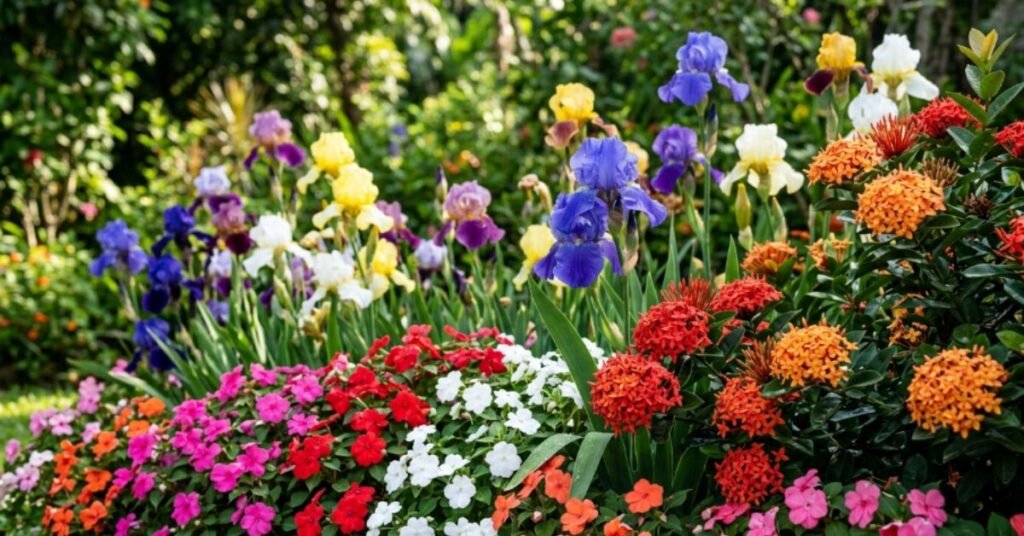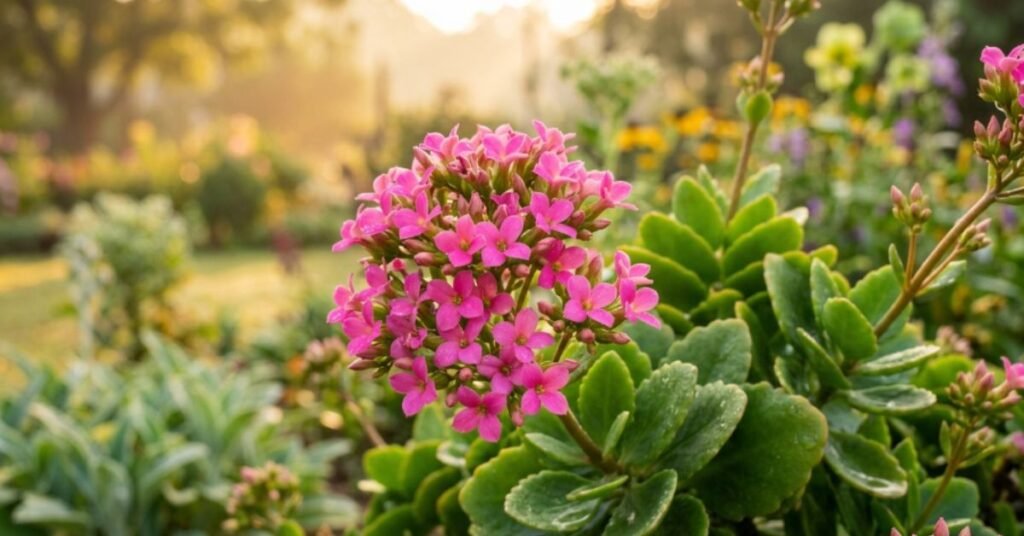
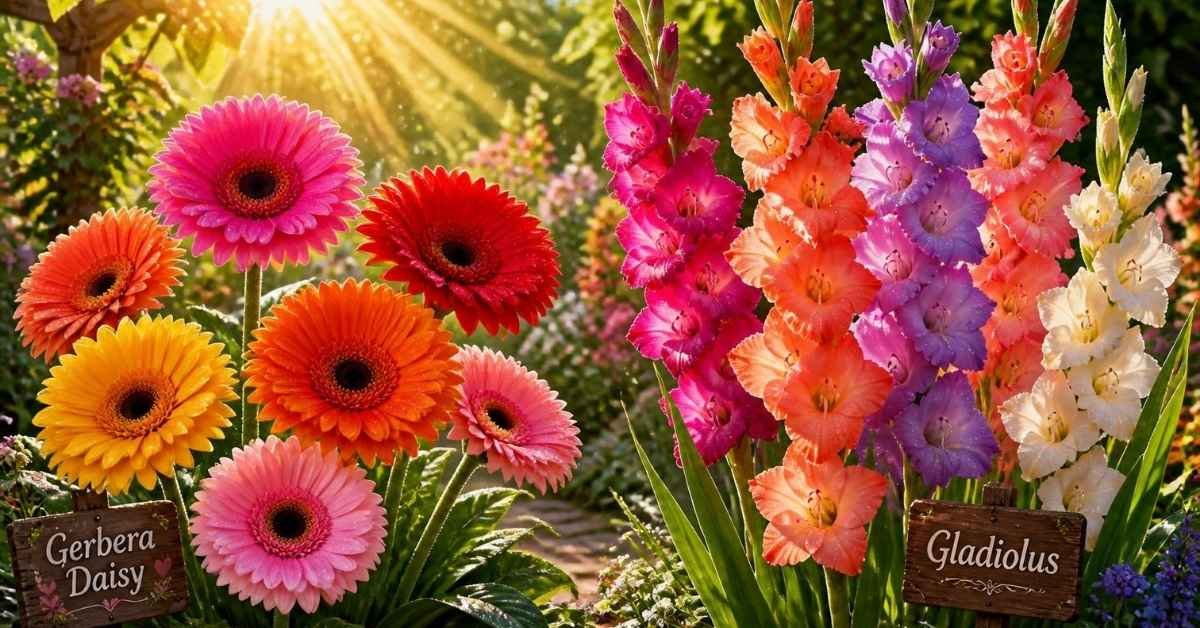
Most people can name three or four flowers that start with G. Gardenia, geranium, gerbera, and gladiolus usually come to mind first. But the letter G holds far more. It covers fragrant shrubs, tall cut flowers, tiny spring bulbs, prairie wildflowers, and even indoor bloomers.
This guide lists 65 flowers that start with G. Each one comes with a short note on color, season, or use. You will also find care basics, safety notes, rare picks, and pairing ideas, so you can move from a name on a page to a plant in your garden or vase.
Quick Picks By Need
Short on time? Start here.
| Your Need | Best G Flower |
| Strongest fragrance | Gardenia |
| Best cut flower | Gladiolus or Gerbera daisy |
| Easiest for beginners | Gaillardia or Geranium |
| Best for pollinators | Goldenrod or Gayfeather |
| Best indoors | Gloxinia |
| Best for shade | Goat’s beard |
| Best for dry heat | Gazania |
| Best true blue | Gentian |
Quick Answer: What Are Flowers That Start With G?
Flowers that start with G are plants whose common or botanical names begin with the letter G. Popular examples include gardenia, geranium, gerbera daisy, gladiolus, gazania, gaillardia, gloxinia, gentian, and grape hyacinth. They grow as annuals, perennials, bulbs, shrubs, and houseplants, and they bloom in almost every color.
Quick Count: Flower Names Starting With G
This article covers 65 flower names starting with G. Of these:
- About 20 are perennials
- About 10 are annuals or short lived plants
- About 12 grow from bulbs, corms, or tubers
- About 8 work well as indoor or protected space plants
- The rest are shrubs, vines, and wildflowers
How To Use This List
- Scan the full list below to find names that catch your eye.
- Jump to the color section if you plan around a palette.
- Check the growing conditions section before you buy.
- Read the detailed profiles for the 20 most useful plants.
- Use the choosing guide to match a plant to your climate and space.
List Of Flowers That Start With G
Here is the full list of 65 flowers that start with G.
- Gardenia
- Geranium (hardy cranesbill)
- Gerbera daisy
- Gladiolus
- Gazania
- Gaillardia (blanket flower)
- Gloxinia
- Gentian
- Grape hyacinth
- Gypsophila (baby’s breath)
- Garden stock
- Geum
- Goldenrod
- Globe amaranth
- Globe thistle
- Gloriosa lily
- Garden phlox
- Gayfeather (liatris)
- Golden poppy
- Gumamela (hibiscus)
- Gaura
- Goat’s rue
- Globeflower
- Goat’s beard
- Gas plant
- Galtonia (summer hyacinth)
- Galanthus
- Gillyflower
- Ginger lily
- Godetia
- Golden marguerite
- Grevillea
- Gooseneck loosestrife
- German iris
- Germander
- Glory of the snow
- Glory bower
- Golden trumpet
- Golden shower
- Goldfish plant
- Granny’s bonnet
- Grass pink
- Great blue lobelia
- Guernsey lily
- Guinea hen flower
- Gentian sage
- Giant allium
- Garlic chives
- Globe daisy
- Goldfields
- Gilia
- Golden Alexanders
- Golden ragwort
- Gumweed
- Grecian windflower
- Great mullein
- Golden glow
- Goldflame honeysuckle
- Golden garlic
- Golden chain tree
- Goldmoss stonecrop
- Giant hyssop
- Garden heliotrope
- Gloriosa daisy
- Georgia aster
Most Recognizable G Flowers
Five names show up again and again in garden centers and florist shops:
- Gardenia: creamy white blooms with a heavy perfume
- Geranium: reliable color for pots and window boxes
- Gerbera daisy: bold, wide faced blooms in bright shades
- Gladiolus: tall spikes with ruffled flowers, loved by florists
- Gypsophila: airy white sprays used as a bouquet filler
If a friend asks you to name a flower starting with G, any of these will do.
Common Flowers That Starting With G
Common G flowers are easy to find at nurseries and grocery stores. These are the ones you can buy without much searching:
- Geranium
- Gerbera daisy
- Gladiolus
- Gardenia
- Gazania
- Gaillardia
- Grape hyacinth
- Garden phlox
- Goldenrod
- Globe amaranth
They are common because they are forgiving, widely bred, and sold in many colors.
Plants Vs Flowers That Start With G
A flower is the bloom. A plant is the whole organism. This matters when you search for flowers that start with G, because names often refer to the plant and not just the bloom.
- Gardenia is a shrub that produces flowers.
- Gladiolus is a corm that sends up a flower spike.
- Goldenrod is a perennial plant, and its yellow plumes are the flowers.
- Gloxinia is a tuberous houseplant grown mostly for its blooms.
Some G plants are grown for foliage, such as germander. Others are grown for both leaf and bloom, such as geum. This list focuses on plants where the flower is a main reason to grow them.
Types Of Flowers That Start With G
You can sort G flowers into six simple groups:
- Garden perennials: geum, gaillardia, garden phlox, globe thistle
- Annuals: globe amaranth, godetia, gilia, garden stock
- Bulbs and corms: gladiolus, galtonia, grape hyacinth, glory of the snow
- Shrubs and trees: gardenia, grevillea, gumamela, golden chain tree
- Houseplants: gloxinia, goldfish plant, gerbera in bright rooms
- Wildflowers: goldenrod, golden Alexanders, gayfeather, Georgia aster
Best G Flowers At A Glance
| Flower | Type | Typical Color | Best Use |
| Gardenia | Shrub | White | Fragrance, containers |
| Geranium | Perennial or annual | Pink, red, purple | Borders, pots |
| Gerbera daisy | Perennial (tender) | Many colors | Cut flowers |
| Gladiolus | Corm | Many colors | Cut flowers |
| Gazania | Perennial (tender) | Orange, yellow | Dry, sunny beds |
| Gaillardia | Perennial | Red and yellow | Easy color |
| Gloxinia | Tuber | Purple, pink, red | Indoors |
| Gentian | Perennial | Blue | Cool, moist spots |
| Grape hyacinth | Bulb | Blue, purple | Spring borders |
| Goldenrod | Perennial | Yellow | Pollinator beds |
Popular Flower Names Starting With G For Gardens And Bouquets
For gardens, gardeners lean on geum, gaillardia, garden phlox, gayfeather, and geranium. These return year after year and fill space well.
For bouquets, florists favor gladiolus, gerbera daisies, gypsophila, garden stock, and globe amaranth. They hold shape in a vase and add height, volume, or filler.
A good bouquet mix is one tall flower (gladiolus), one round focal flower (gerbera), and one filler (gypsophila). That simple formula works for most arrangements.
Common Vs Rare G Flowers
Common G flowers are sold almost everywhere. Rare G flowers usually need a specialty nursery, a seed exchange, or a hunt through wildflower growers.
| Common | Rare |
| Geranium | Guernsey lily |
| Gladiolus | Guinea hen flower |
| Gardenia | Gas plant |
| Gerbera daisy | Grass pink |
| Gaillardia | Goldfields |
Rare does not always mean hard to grow. It often means the plant is regional, slow to spread commercially, or only sold as bulbs in autumn.
Rare Flowers That Beginning With G
If you want something your neighbors will not have, try these:
- Guernsey lily (Nerine sarniensis): shimmering pink or red petals that sparkle in light, blooming in autumn.
- Guinea hen flower (Fritillaria meleagris): nodding bells with a checkered pattern in purple and white.
- Gas plant (Dictamnus): long lived perennial with scented foliage and pink or white spires.
- Grass pink (Calopogon): a native orchid with magenta flowers, found in wet meadows.
- Goldfields (Lasthenia): a California wildflower that carpets fields in yellow.
- Gilia: pale blue globes on thin stems, loved by bees.
- Glory bower (Clerodendrum): clusters of star shaped flowers on a shrub.
Color And Design Highlights
Color sets the mood of a garden. These sections sort G flowers by shade, so you can plan a palette fast.
Purple Flowers That Start With G
Looking for a flower that starts with G and is purple? You have plenty of choices:
- Gloxinia
- Grape hyacinth (blue purple)
- Gayfeather
- Garden phlox
- Globe thistle (steel blue to violet)
- Giant allium
- Gentian sage
- Georgia aster
- Germander
Gayfeather and giant allium also give you strong vertical lines.
White Flowers With G Names
- Gardenia
- Gypsophila
- Garden stock (white forms)
- Goat’s beard
- Galanthus
- Glory of the snow (white centers)
- Garden phlox (white forms)
- Geranium (white forms)
White flowers brighten shade and glow at dusk. Pair them with dark foliage for contrast.
Yellow And Gold G Flowers
- Goldenrod
- Gazania
- Golden marguerite
- Golden poppy
- Golden Alexanders
- Golden ragwort
- Golden glow
- Gloriosa daisy
- Goldfields
- Gumweed
- Golden trumpet
- Golden shower
Yellow is the most crowded G color group. It is also the best for late season color in meadows.
Red, Orange, And Hot Color Picks
- Gaillardia
- Gladiolus
- Geum
- Gerbera daisy
- Gazania
- Gumamela
- Grevillea
- Globe amaranth
- Geranium (red forms)
Plant these in full sun and group them in drifts for a warm, tropical look.
Perennials That Start With G
Perennials come back every year, so they save money and effort. Good G perennials include:
- Geum
- Gaillardia
- Garden phlox
- Gayfeather
- Globe thistle
- Goat’s beard
- Goldenrod
- Hardy geranium
- Gas plant
- Gentian
- Gooseneck loosestrife
- Golden marguerite
- Globeflower
Most of these need a spring cleanup, an occasional division, and little else. Check your hardiness zone before buying, because a plant that survives in one region may fail in another.
Annual Flowers That Start With G
Annuals bloom heavily for one season. Try these:
- Globe amaranth
- Godetia
- Gilia
- Garden stock
- Gazania (annual in cool zones)
- Gerbera daisy (annual in cool zones)
- Gypsophila (annual forms)
- Garden geranium (annual in cool zones)
Annuals give fast color. They are also a smart way to test a new color scheme before planting perennials.
Indoor Bloomers And Bulb Types
Not every G flower lives outside. Some do best on a bright windowsill or in a sunroom.
- Gloxinia: velvety bells, best in bright indirect light
- Goldfish plant: small orange flowers that look like swimming fish
- Gerbera daisy: works indoors with a sunny south window
- Gardenia: possible indoors, but fussy about humidity and light
- Ginger lily: good in a warm conservatory
Bulbs, Corms, And Tuberous Types
- Bulbs: grape hyacinth, giant allium, golden garlic, galanthus, Guernsey lily
- Corms: gladiolus, galtonia (bulb like), glory of the snow
- Tubers: gloxinia, gloriosa lily, ginger lily
Plant spring bulbs in autumn. Plant gladiolus corms in spring after frost, and stagger the planting every two weeks for a longer bloom.
Growing Conditions, Common Problems, And Safety
Good results start with matching the plant to the spot. These basics cover most G flowers.
Light And Soil Basics
- Full sun (6 or more hours): gazania, gaillardia, gladiolus, gerbera, goldenrod, gayfeather
- Part shade: goat’s beard, globeflower, hardy geranium, gentian
- Well drained soil: gazania, gypsophila, gaillardia, and most bulbs
- Rich, moist soil: globeflower, gentian, gooseneck loosestrife
- Acidic soil: gardenia needs a pH around 5 to 6
When in doubt, improve the soil with compost and avoid planting in places where water pools.
Water And Pond Flower Picks
A few G plants love wet feet:
- Globeflower: thrives beside streams and in damp meadows
- Gooseneck loosestrife: handles moist soil, but spreads fast
- Grass pink: needs bog like conditions
- Great blue lobelia: loves consistently damp soil
True water garden flowers starting with G are limited, so bog gardens are the best fit.
Common Issues And Easy Fixes
| Problem | Likely Cause | Easy Fix |
| Yellow gardenia leaves | High soil pH or poor drainage | Use acidic fertilizer, improve drainage |
| Powdery mildew on phlox | Poor airflow, humidity | Space plants, water at the base |
| Leggy gladiolus | Too little light | Move to full sun, stake tall stems |
| Few blooms | Too much nitrogen | Switch to a balanced or bloom fertilizer |
| Rotting crowns | Overwatering | Reduce water, loosen the soil |
| Bud drop on gardenia | Sudden temperature change | Keep conditions steady |
Deadheading, which means removing spent blooms, helps gaillardia, geranium, and gerbera bloom longer.
Safety, Toxicity, And Special Cases
Always check a plant before placing it near children or pets.
- Gloriosa lily: all parts are highly toxic if eaten
- Golden chain tree: seeds and pods are poisonous
- Gardenia and geranium (Pelargonium): listed as toxic to cats and dogs by the ASPCA
- Gas plant: sap can cause skin irritation in sunlight
- Gerbera daisy: generally listed as non toxic to pets
Goldenrod is often blamed for hay fever. Ragweed, which blooms at the same time, is the real cause in most cases. If you have severe allergies or a pet that chews plants, confirm the details with a doctor or vet before planting.
How To Choose The Right G Flower For Your Space
The best plant is the one that fits your site. Follow these steps:
- Find your hardiness zone.
- Measure sunlight in the spot.
- Test or check the soil type.
- Decide your purpose: cut flowers, color, fragrance, or wildlife.
- Pick two or three plants, not ten, to start.
Choose By Climate, Care Level, And Purpose
- Cold climates: goldenrod, gayfeather, geum, globe thistle, gentian
- Hot, dry climates: gazania, gaillardia, gaura, grevillea
- Mild, humid climates: gardenia, gerbera, gumamela
- Low care: gaillardia, hardy geranium, goldenrod
- Higher care: gardenia, gloxinia, gentian
Cut Flower And Bouquet Favorites
- Gladiolus
- Gerbera daisy
- Gypsophila
- Garden stock
- Globe amaranth (also dries well)
- Gayfeather
- Garden phlox
- Globe thistle (dries well)
Cut stems in the morning, use clean water, and trim stems at an angle.
Pollinator Friendly And Meadow Picks
Pollinators love single, open flowers with easy access to nectar.
- Goldenrod, for bees and late season butterflies
- Gayfeather, a monarch favorite
- Giant hyssop, for bees and hummingbirds
- Gaillardia, for bees and butterflies
- Golden Alexanders, for native bees
- Georgia aster, for fall pollinators
- Gilia, for bees
Mix several of these to keep blooms going from summer to frost.
Container And Small Space Picks
- Geranium
- Gazania
- Gerbera daisy
- Gardenia (dwarf varieties)
- Grape hyacinth
- Goldmoss stonecrop
Use pots with drainage holes and a quality potting mix.
Indoor Or Protected Space Picks
- Gloxinia
- Goldfish plant
- Gerbera daisy
- Gardenia (with humidity)
- Ginger lily
Keep these away from cold drafts and heating vents.
Beginner Friendly Choices
New to gardening? Start with gaillardia, geranium, goldenrod, grape hyacinth, and gazania. They tolerate mistakes and reward you quickly.
Fragrant G Flowers
- Gardenia, with a rich, creamy scent
- Garden stock, with a clove like spice
- Gillyflower, an old fashioned spicy fragrance
- Gas plant, with lemony foliage
- Garden phlox, with a sweet scent
- Goat’s rue, mildly scented
- Gladiolus (some species, such as Abyssinian types)
Plant fragrant varieties near doors, seats, and paths where you will notice them.
Detailed Plant Profiles
Here are close looks at 20 of the most useful G flowers. Zones refer to the USDA hardiness system.
Gardenia
Gardenia is a shrub with glossy leaves and creamy, waxy blooms. It is best known for its strong perfume.
- Zones: about 8 to 11
- Light: bright light with some afternoon shade
- Soil: acidic, rich, and well drained
- Tip: Keep watering steady and avoid moving it often.
Geranium
True geraniums, also called hardy geraniums or cranesbills, are tough perennials with saucer shaped flowers. Garden geraniums sold in pots are usually Pelargonium, a different genus.
- Zones: 3 to 9 for hardy types
- Light: sun to part shade
- Tip: Cut back after the first flush to promote a second bloom.
Gerbera Daisy
Gerbera daisies produce large, bright flowers on bare stems. They come in nearly every color except true blue.
- Zones: 8 to 11
- Light: full sun, with afternoon shade in hot areas
- Tip: Keep the crown above the soil line to avoid rot.
Gladiolus
Gladiolus, sometimes called sword lily, grows from corms and forms tall spikes of flowers.
- Zones: hardy in about 7 to 10, lifted in colder areas
- Light: full sun
- Tip: Plant every two weeks for continuous blooms, and stake tall stems.
Gazania
Gazania has daisy like flowers that close at night and in cloudy weather. It handles heat and poor soil.
- Zones: 9 to 11, grown as an annual elsewhere
- Light: full sun
- Tip: Avoid overwatering.
Gaillardia
Also known as blanket flower, gaillardia has red and yellow blooms. It flowers from early summer until frost.
- Zones: 3 to 10 depending on the type
- Light: full sun
- Tip: Deadhead often, and do not overfeed.
Gloxinia
Gloxinia is a tuberous houseplant with velvety, bell shaped flowers.
- Light: bright, indirect
- Water: water the soil, not the leaves
- Tip: Let the plant rest after blooming, then repot the tuber.
Gentian
Gentians are famous for deep blue, trumpet shaped flowers. They can be tricky, but the color is worth it.
- Zones: about 3 to 8, depending on species
- Light: sun to light shade
- Tip: Choose a cool, moist, well drained site and leave it undisturbed.
Grape Hyacinth
Grape hyacinth sends up clusters of tiny blue or purple bells in early spring.
- Zones: 3 to 9
- Light: sun to part shade
- Tip: Plant in autumn and let the foliage die back naturally.
Gypsophila
Gypsophila, or baby’s breath, has clouds of tiny white or pale pink flowers. Florists use it as a filler.
- Zones: about 3 to 9
- Light: full sun
- Soil: alkaline, well drained
- Tip: Cut back after blooming to encourage a repeat.
Garden Stock
Garden stock produces dense spikes in white, pink, lilac, and purple, and smells of clove.
- Light: full sun, cool weather
- Tip: Sow in cool seasons, because heat shortens its bloom time.
Geum
Geum has ruffled flowers in red, orange, and yellow above scalloped foliage.
- Zones: 4 to 9
- Light: sun to part shade
- Tip: Divide every few years to keep plants vigorous.
Goldenrod
Goldenrod is a native perennial with golden plumes in late summer and fall. It supports many insects.
- Zones: 3 to 9
- Light: full sun
- Tip: Choose clumping varieties such as ‘Fireworks’ if you want less spread.
Globe Amaranth
Globe amaranth (Gomphrena) has round, clover like blooms in magenta, purple, white, and orange. They dry beautifully.
- Light: full sun, heat tolerant
- Tip: Harvest when fully open and hang upside down to dry.
Globe Thistle
Globe thistle forms spiky, steel blue spheres on tall stems.
- Zones: 3 to 8
- Light: full sun
- Tip: Use it for texture, and for dried arrangements.
Gloriosa Lily
Gloriosa lily is a climbing plant with flame colored, curled petals. It is dramatic and also highly poisonous.
- Zones: 9 to 11, or grow in containers in cold areas
- Light: full sun
- Tip: Wear gloves and keep it away from kids and pets.
Garden Phlox
Garden phlox gives large, fragrant clusters from midsummer on.
- Zones: 4 to 8
- Light: full sun
- Tip: Choose mildew resistant varieties and keep air moving.
Gayfeather
Gayfeather, or liatris, has purple spikes that open from the top down.
- Zones: 3 to 9
- Light: full sun
- Tip: Great for dry soils and for butterflies.
Golden Poppy
Golden poppy, or California poppy, has satin orange or yellow petals and feathery blue green leaves.
- Light: full sun
- Tip: Sow seeds directly, since it dislikes transplanting.
Gumamela
Gumamela is the Filipino name for hibiscus (Hibiscus rosa-sinensis). It has large, trumpet shaped blooms in red, pink, yellow, and orange.
- Zones: 9 to 11, or grown in pots
- Light: full sun
- Tip: Feed regularly during the growing season.
Meaning, Symbolism, And Floral Styling
Flowers carry meaning, and many G flowers have a long history of symbolism.
- Gardenia: purity, refinement, and secret love
- Gladiolus: strength, integrity, and remembrance
- Gerbera daisy: cheerfulness and innocence
- Gypsophila: everlasting love and innocence
- Geranium: comfort and friendship
- Goldenrod: encouragement and good fortune
- Gentian: sincerity and quiet strength
Meanings vary by culture and era, so treat them as a guide and not a rule.
Styling ideas:
- Use one color family for a calm, modern look.
- Pair gladiolus with gypsophila for a classic wedding style.
- Fill a jar with gerbera daisies for a cheerful table.
- Combine goldenrod and gayfeather for a wild meadow bouquet.
Companion Pairings For G Flowers
Good companions share the same light and water needs.
- Gardenia: pairs with azalea and hydrangea
- Gaillardia: pairs with coneflower and salvia
- Gayfeather: pairs with black eyed Susan and ornamental grasses
- Goldenrod: pairs with asters and little bluestem
- Gladiolus: pairs with dahlias and zinnias
- Geum: pairs with salvia and catmint
- Grape hyacinth: pairs with tulips and daffodils
Common Mistakes When Choosing G Flowers
- Confusing geranium and Pelargonium. They are different plants with different hardiness.
- Planting gardenias in alkaline soil. They struggle without acidic conditions.
- Ignoring toxicity. Gloriosa lily and golden chain tree are dangerous.
- Blaming goldenrod for allergies. Ragweed is usually the cause.
- Planting all G flowers at once. You may get a bloom gap, so stagger bloom times.
- Overfeeding. Too much nitrogen creates leaves and few flowers.
- Skipping hardiness zones. A tender plant will not survive a hard winter outdoors.
- Choosing aggressive spreaders. Gooseneck loosestrife can take over a bed.
Conclusion
Flowers that start with G offer something for almost every garden, vase, and windowsill. You can choose fragrant gardenia, easy gaillardia, tall gladiolus, or a rare gem such as the Guernsey lily.
Start with two or three plants that match your light, soil, and climate. Add more as you learn what thrives. Check safety notes before planting around kids or pets, and enjoy the long season of color these G flowers bring.
FAQs
What Is The Most Popular Flower That Starts With G?
Geranium and gardenia rank among the most popular, with gladiolus and gerbera daisy close behind.
Which Flower Starting With G Smells The Best?
Gardenia is widely considered the most fragrant G flower, with a rich, creamy scent.
Which Flowers That Start With G Are Perennials?
Geum, gaillardia, goldenrod, gayfeather, garden phlox, globe thistle, and hardy geranium are reliable perennials.
Are There Indoor Flowers That Start With G?
Yes. Gloxinia, goldfish plant, and gerbera daisy all bloom indoors with enough light.
Which G Flowers Are Good For Beginners?
Gaillardia, geranium, goldenrod, grape hyacinth, and gazania are forgiving and easy to grow.
What Are Rare Flowers That Start With G?
Guernsey lily, guinea hen flower, gas plant, grass pink, and goldfields are less common choices.
What Flower Starts With G And Is Purple?
Gayfeather, gloxinia, garden phlox, giant allium, and grape hyacinth all offer purple blooms.
Are There Annual Flowers That Start With G?
Yes. Globe amaranth, godetia, gilia, and garden stock are common annuals.
Are There Flowering Plants That Start With G For Pollinators?
Yes. Goldenrod, gayfeather, giant hyssop, gaillardia, and Georgia aster feed bees and butterflies.
Which G Flower Is Best For Bouquets?
Gladiolus, gerbera daisy, and gypsophila are top picks for cut flower arrangements.
What Kind Of Daisy Flowers Start With G?
Gerbera daisy, gloriosa daisy, gazania, and globe daisy are daisy like G flowers.
How Do You Care For G Flowers?
Match each plant to its light, soil, and water needs, deadhead spent blooms, and avoid heavy nitrogen feeding.
What Are Common G Flower Names?
Common names include gardenia, geranium, gerbera, gladiolus, gazania, gaillardia, and goldenrod.
What Are Yellow Flowers With G?
Goldenrod, golden marguerite, golden poppy, gazania, gloriosa daisy, and goldfields are yellow or gold.
What Are White Flowers With G?
Gardenia, gypsophila, goat’s beard, galanthus, and white garden stock are popular white options.
What Are Bulb Flowers With G?
Grape hyacinth, giant allium, galanthus, Guernsey lily, and glory of the snow grow from bulbs.
Are There Rare Blue Flowers With G?
Yes. Gentian is the classic true blue, and great blue lobelia and gentian sage are other blue options.
Are All G Flowers Easy To Grow?
No. Gaillardia and goldenrod are easy, while gardenia, gentian, and gloxinia need more attention.

Jack Danniel is a flower enthusiast, writer, and experienced SEO expert passionate about creating helpful content.
With years of experience in SEO and content strategy, he shares engaging and informative insights about flowers.
His goal is to make floral information easy to understand while helping readers discover the beauty of nature.