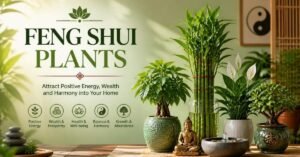
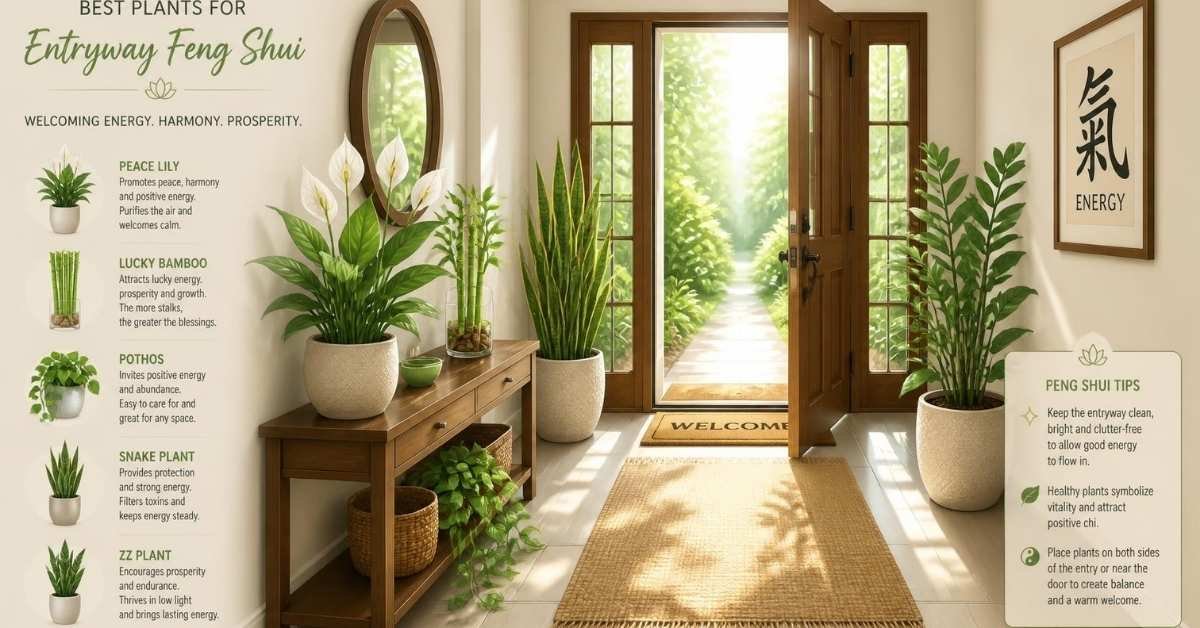
Walk into a home where the plants are thriving and you feel it right away. The air seems lighter. The room feels calmer. Feng shui takes that feeling and turns it into a practice.In feng shui, living plants bring the Wood element into a space. Wood stands for growth, vitality and fresh chi (energy). Choose the right plant, put it in the right spot and keep it healthy, and it is said to support wealth, health and good relationships.This guide covers 35 feng shui plants, the best placement for each room, the plants to avoid, and the pet safety facts most guides skip.
You will also find a clear answer to the money plant confusion that trips up many buyers.A quick honest note before we start. Feng shui is a traditional Chinese philosophy, not a proven science. What research does support is that caring for greenery can lift mood and reduce stress. Treat the advice below as a thoughtful way to arrange your space, and enjoy the benefits that come with a healthy, well placed plant.
Quick Answer: Best Feng Shui Plants For Home
The best feng shui plants for home are the money tree, jade plant, lucky bamboo, Chinese money plant, golden pothos, rubber plant, peace lily and snake plant. Place them in the southeast (wealth) corner, near the entrance or in the living room, and keep them healthy and dust free.
Top picks at a glance:
- Money tree (Pachira aquatica): best for wealth and pet safe
- Jade plant (Crassula ovata): best for prosperity and business success
- Lucky bamboo (Dracaena sanderiana): best for beginners and offices
- Chinese money plant (Pilea peperomioides): best for small spaces
- Golden pothos (Epipremnum aureum): best for low light and busy homes
- Peace lily (Spathiphyllum): best for harmony and calm
- Rubber plant (Ficus elastica): best for steady financial growth
- Orchid (Phalaenopsis): best for love and refined energy
What Are Feng Shui Plants?
Feng shui plants are houseplants and garden plants chosen for their symbolism, shape and energy. They are used to improve the flow of chi in a home, office or garden.
Each plant is linked to a meaning. Round leaves suggest coins and wealth. Upright stems suggest growth and career rise. Soft, trailing foliage suggests gentle, nurturing energy. A plant is picked for the goal you want to support, then placed where that goal lives in your space.
Three feng shui ideas sit behind every recommendation in this guide:
- Chi: the life energy that moves through a space. Plants are believed to soften and circulate it.
- The Five Elements: wood, fire, earth, metal and water. Living plants add Wood energy.
- The Bagua map: an energy map that divides a home into nine life areas, such as wealth, family, health, career and relationships.
What Makes A Plant Good For Feng Shui?
A good feng shui plant has healthy growth, a friendly shape and a clear purpose. Before you buy, check these five traits.
- Rounded or soft leaves. Round leaves are linked to coins and abundance. Soft, heart shaped leaves feel welcoming and calm.
- Strong, upward growth. Plants that grow steadily upward symbolize progress and new opportunity.
- Vibrant green color. Fresh green signals life, health and renewal.
- Cultural meaning. Some plants carry centuries of symbolism, like bamboo for resilience and orchids for refinement.
- Healthy condition. This is the most important rule. A wilting, dusty or dying plant is believed to create stagnant chi, no matter how lucky its name sounds.
Easy care matters too. A plant you can keep alive does more for your home than a rare one that struggles.
35 Feng Shui Plants At A Glance
Use this table to compare lucky plants for home quickly. Pet safety notes follow common guidance from veterinary poison resources, so always confirm your exact variety before bringing a plant home.
| # | Plant | Feng Shui Meaning | Best Spot | Light | Pet Safety |
| 1 | Money tree | Wealth, stability | Southeast, living room | Bright, indirect | Safe |
| 2 | Jade plant | Prosperity, friendship | Entrance, desk | Bright | Toxic |
| 3 | Chinese money plant | Coins, abundance | Shelf, desk | Bright, indirect | Safe |
| 4 | Golden pothos | Growth, protection | Kitchen, bathroom | Low to medium | Toxic |
| 5 | Rubber plant | Steady wealth | Living room, office | Bright, indirect | Toxic |
| 6 | Lucky bamboo | Luck, resilience | Desk, southeast | Low to medium | Toxic |
| 7 | Peace lily | Harmony, calm | Living room, bedroom | Low to medium | Toxic |
| 8 | Snake plant | Protection, strength | Entry hall, office | Low to bright | Toxic |
| 9 | ZZ plant | Growth, new beginnings | Office, hallway | Low to medium | Toxic |
| 10 | Areca palm | Vitality, abundance | Living room | Bright, indirect | Safe |
| 11 | Bamboo palm | Flexibility, harmony | Corners, lobby | Medium | Safe |
| 12 | Spider plant | Balance, family | Kitchen, family room | Medium | Safe |
| 13 | Boston fern | Renewal, softness | Bathroom, patio | Medium, humid | Safe |
| 14 | Orchid (Phalaenopsis) | Love, refinement | Bedroom, living room | Bright, indirect | Safe |
| 15 | Citrus (kumquat, mandarin) | Luck, fortune | Entrance, balcony | Full sun | Mildly toxic |
| 16 | Basil or tulsi | Protection, purity | Kitchen, balcony | Full sun | Generally safe |
| 17 | Rosemary | Clarity, cleansing | Kitchen, windowsill | Full sun | Safe |
| 18 | Lavender | Calm, rest | Bedroom window | Full sun | Mildly toxic |
| 19 | Jasmine | Love, sweetness | Bedroom, patio | Bright | Safe (true jasmine) |
| 20 | Peony | Romance, honor | Garden, vase | Full sun | Toxic |
| 21 | Chrysanthemum | Longevity, joy | Garden, entrance | Full sun | Toxic |
| 22 | Water narcissus | New year fortune | Living room | Bright | Toxic |
| 23 | Peach blossom | Romance, vitality | Garden, vase | Full sun | Toxic |
| 24 | Ficus ginseng | Longevity, luck | Entrance, office | Bright, indirect | Toxic |
| 25 | Happy plant | Joy, good fortune | Living room, office | Medium | Toxic |
| 26 | Aloe vera | Healing, protection | Kitchen, windowsill | Bright | Toxic |
| 27 | Heartleaf philodendron | Love, soft energy | Bedroom shelf | Low to medium | Toxic |
| 28 | Hoya (heart) | Love, devotion | Bedroom, desk | Bright, indirect | Safe |
| 29 | Calathea | Calm, balance | Bedroom, study | Medium, humid | Safe |
| 30 | Peperomia | Growth, easy luck | Desk, shelf | Medium | Safe |
| 31 | Parlor palm | Gentle vitality | Bedroom, apartment | Low to medium | Safe |
| 32 | Christmas cactus | Gratitude, abundance | Living room, window | Bright, indirect | Safe |
| 33 | Chinese evergreen | Good luck, longevity | Living room, office | Low to medium | Toxic |
| 34 | Eucalyptus | Cleansing, clarity | Bathroom (hung) | Bright | Toxic |
| 35 | Monstera | Growth, abundance | Living room | Bright, indirect | Toxic |
Best Feng Shui By Goal
Match the plant to your intention. This makes your choice simple and your placement more purposeful.
For wealth and abundance
- Money tree
- Jade plant
- Chinese money plant
- Rubber plant
- Citrus tree
For positive energy and calm
- Peace lily
- Spider plant
- Areca palm
- Boston fern
- Bamboo palm
For love and relationships
- Orchid
- Hoya
- Jasmine
- Peony
- Heartleaf philodendron
For health and protection
- Snake plant
- Aloe vera
- Basil or tulsi
- Rosemary
- Lavender
For career and focus
- Lucky bamboo
- ZZ plant
- Rubber plant
- Peperomia
Common Money Plant Confusion
Ask five people what a money plant is and you may get five different answers. This is the biggest source of confusion in feng shui plant shopping, so here is a clear breakdown.
| Common Name | Botanical Name | What It Looks Like |
| Money plant (India, Southeast Asia) | Epipremnum aureum (golden pothos) | Heart shaped, trailing vine |
| Chinese money plant | Pilea peperomioides | Round, coin shaped leaves on stalks |
| Money tree | Pachira aquatica | Braided trunk, palm like leaves |
| Jade plant (also called money plant) | Crassula ovata | Thick, oval, jade green leaves |
How to decide: If you want a trailing vine for a shelf or window, choose pothos. If you want coin shaped leaves in a small space, choose Pilea. If you want a statement plant for a corner, choose the money tree. If you want a desk plant with thick, glossy leaves, choose jade.
Always check the botanical name on the label. It removes the guesswork and helps you buy the plant you actually want.
Money Attracting Plants
These plants are the most popular choices for inviting financial luck in feng shui. They work best in the wealth corner and near entrances.
- Money tree. The braided trunk is said to trap fortune inside the home. The five leaf clusters on each stem are linked to the five elements. It is also one of the few lucky plants that is safe around pets.
- Jade plant. Its thick, coin like leaves make it a classic symbol of prosperity. Many business owners keep one near a shop entrance or desk.
- Chinese money plant. Perfectly round leaves resemble coins. It is compact, easy to propagate and often shared with friends as a gift of good fortune.
- Rubber plant. Its glossy, rounded leaves suggest steady, growing wealth. It suits bright living rooms and offices.
- Citrus trees. Kumquat and mandarin trees are associated with abundance, especially in Chinese New Year traditions, because their golden fruit looks like gold.
- Golden pothos. A fast growing vine linked to growth and protection. It is among the easiest plants to keep alive, which makes steady “growth” easy to maintain.
Tip for wealth plants: Keep leaves clean and growing. A thriving money plant sends a stronger symbolic message than an expensive one that is struggling.
Plants That Bring Positive Energy
Positive energy plants are chosen to create calm, balance and a welcoming feel. These are the most trusted options.
- Peace lily: Soft white blooms and glossy leaves create a peaceful mood. It is popular in living rooms and bedrooms.
- Areca palm: Feathery fronds add lively, flowing energy and soften sharp corners.
- Spider plant: Easy, forgiving and linked to balance and family harmony.
- Boston fern: Lush, soft foliage represents renewal. It thrives in humid bathrooms.
- Bamboo palm: Brings flexible, upward energy to larger rooms and lobbies.
- Basil or tulsi: Valued in many homes for purity and protection, and handy in the kitchen.
Plants in feng shui are not magic switches. They work as part of a clean, uncluttered, well lit space. A cluttered room with one lucky plant will not feel balanced. A tidy room with healthy greenery usually does.
Feng Shui Plant Placement
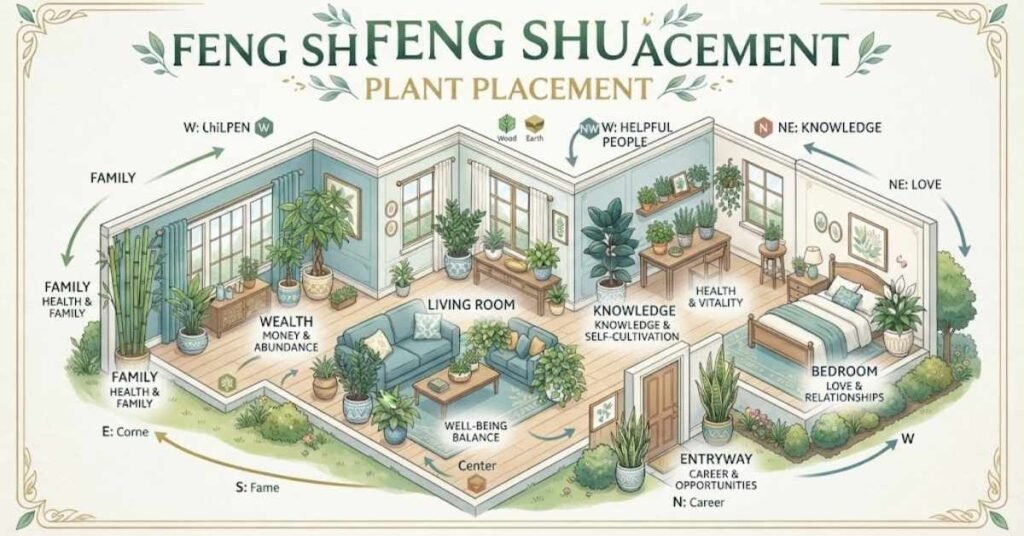
Placement matters as much as plant choice. Use these core rules.
1. Use the wealth corner. In the compass method, the wealth area is the southeast of your home or room. In the popular Bagua map method (BTB school), stand at the front door and look in. The far left back corner is your wealth area.
2. Use the front door area. The entrance is where chi enters. A healthy plant here welcomes energy in. Avoid blocking the door or the path.
3. Soften sharp corners. Pointed furniture corners and wall edges are believed to send sharp energy across a room. A leafy plant can soften them.
4. Match the element. Wood energy is linked to the east and southeast. Plants feel naturally at home there.
5. Keep walkways clear. Chi should move freely. Do not let large plants crowd doorways or stairs.
6. Never place plants in dark, forgotten corners. A plant that is hidden and neglected will decline, and a declining plant creates the opposite effect.
Direction note for money plants: Feng shui usually points to the southeast for wealth. Some Vastu traditions suggest the north. If you follow one system, stay consistent with it.
Room By Room Feng Shui Plant Guide
Each room has a different purpose, so each needs a different type of plant energy.
| Room | Best Plants | Why |
| Living room | Money tree, rubber plant, areca palm | Family gathering space that benefits from lively, abundant energy |
| Kitchen | Basil, rosemary, spider plant, pothos | Balances the fire and water elements |
| Bathroom | Boston fern, pothos, lucky bamboo | Handles humidity and softens draining energy |
| Bedroom | Peace lily, orchid, lavender, parlor palm | Calm, soft and restful |
| Home office | Lucky bamboo, ZZ plant, jade plant | Supports focus, career and steady income |
| Entryway | Jade plant, money tree, snake plant | Welcomes fortune and protects the threshold |
| Dining room | Orchid, citrus, peace lily | Encourages harmony and abundance |
| Children’s room | Spider plant, calathea, parlor palm | Gentle, non toxic and easy to care for |
Lucky Plants For Home
If you are building a collection of lucky plants for home, start small. Three or four well chosen plants beat a crowded jungle.
A simple starter set:
- One wealth plant (money tree or jade) in the southeast
- One calming plant (peace lily or areca palm) in the living room
- One protective plant (snake plant or basil) near the entrance or kitchen
- One easy plant (pothos or lucky bamboo) for a shelf or desk
This covers wealth, calm, protection and ease without overwhelming your space or schedule.
Feng Shui Plants For Bedroom
The bedroom is a place for rest, so plants here should be soft, calm and few in number. Many feng shui practitioners suggest fewer plants in sleeping areas because very active, bold energy can feel stimulating.
Best Bedroom Plant Placements
- On a dresser or shelf across from the bed, not directly overhead
- Near a window, where light helps the plant thrive
- In a corner, to soften sharp furniture edges
- At least a few feet from the head of the bed
Best bedroom plants: peace lily, orchid, lavender, jasmine, parlor palm, calathea and hoya.
Bedroom Plants To Use Carefully
- Cactus and very spiky plants. Many practitioners believe sharp spines create hostile energy while you sleep. If you love your cactus, keep it away from the bed or move it to a living area.
- Snake plant. Its sword like leaves worry some feng shui experts, though others find it protective. Place it near the door, not the bed.
- Large, leafy plants crowded near the bed. Too many can make the room feel heavy and busy.
- Strongly scented flowers. Heavy fragrance can be distracting for light sleepers.
- Any sick or dying plant. Remove it quickly. Neglected plants are linked to stagnant energy.
A note on air: Many people say plants improve bedroom air quality. Real world evidence is mixed, because a typical home needs far more plants than most people keep to change air quality noticeably. Choose bedroom plants for calm and comfort, not for air cleaning claims.
Feng Shui Plants For Office
A work space needs plants that support focus, steady income and professional growth. Healthy greenery can also make a desk feel more pleasant and less sterile.
Best Office Plant Placement
- Behind your desk, not facing your back to the door. This is a popular feng shui “commanding position” idea. A plant in view of the door helps balance things.
- Southeast corner of the office: the wealth area.
- East side: linked to health and new growth.
- Away from sharp, cluttered desk edges.
- Not directly blocking your monitor or workflow.
Lucky Plants For Office Desk
For a desk, pick small, low maintenance plants:
- Lucky bamboo: thrives in water and low light
- Jade plant: compact and symbolic of business success
- ZZ plant: survives low light and missed waterings
- Chinese money plant: small and cheerful
- Peperomia: neat, tidy and pet safe
Lucky Bamboo Stalk Meanings
The number of stalks carries meaning in feng shui. This is one of the most searched details about lucky bamboo.
| Stalks | Meaning |
| 2 | Love and partnership |
| 3 | Happiness, wealth and long life |
| 5 | Balance of the five elements and health |
| 6 | Good luck and smooth fortune |
| 7 | Good health |
| 8 | Growth and prosperity |
| 9 | Great good fortune |
| 10 | Perfection and completeness |
| 21 | Powerful blessing and long life |
Avoid 4 stalks. The number four sounds like the word for death in Chinese, so it is considered unlucky. This is a cultural belief, not a rule of botany.
Plants For Business Reception Areas
A reception area sets the first impression. Choose larger, healthy, welcoming plants.
- Money tree near the entrance for prosperity
- Rubber plant or areca palm to add lush, confident energy
- Bamboo palm in corners to soften the space
- Orchids on the reception desk for refinement
- Snake plant at the door for strength
Keep them dust free and well watered. A tired plant in a reception area sends the wrong message to every visitor.
Feng Shui Front Door Plants
The front door is called the “mouth of chi.” This is where energy, and opportunity, enters your home. A healthy plant here welcomes good energy and softens the transition from the street.
Best front door plants:
- Jade plant: welcomes prosperity
- Money tree: stable, abundant entry energy
- Citrus tree or kumquat: symbol of good fortune
- Snake plant: protective and tough
- Bamboo palm or lucky bamboo: flexible, welcoming energy
Rules for the entrance:
- Keep the path clear and easy to walk.
- Use rounded pots in earthy colors.
- Place plants in pairs on either side of the door for balance, if space allows.
- Avoid thorny plants directly at the entrance, since they are believed to create sharp energy.
- Remove dead leaves and keep the area tidy.
Feng Shui Outdoor Plants
Outdoor space supports the energy of your entire property. Healthy garden plants are said to strengthen the protective and nurturing energy around your home.
Outdoor Plants That Bring Money And Good Luck
- Citrus trees (lemon, orange, kumquat): golden fruit symbolizes wealth
- Jade plant (in warm climates): thrives outdoors in mild weather
- Bamboo: a classic symbol of resilience and luck (use clumping varieties, as running bamboo spreads fast)
- Peonies: linked to honor and prosperity
- Chrysanthemums: associated with long life and happiness
- Peach and plum blossoms: linked to vitality and romance
Balcony And Patio Plant Placement
- Face plants toward the home so energy flows inward.
- Keep balconies tidy. Clutter blocks chi.
- Use sturdy pots that will not tip in wind.
- Southeast balconies are ideal for wealth plants.
- Choose sun loving plants such as citrus, basil, rosemary and lavender.
- Do not let dead leaves pile up in corners.
Feng Shui Garden Plants
- Curved garden paths with soft borders feel more welcoming than straight, sharp lines.
- Plant tall shrubs or trees toward the back for support and protection.
- Keep flowers and shrubs well trimmed. Overgrown gardens are linked to stagnant energy.
- Avoid large, dark trees close to the front door. They can block light and opportunity.
- Add water carefully. A small, clean fountain adds flowing energy only if it is well maintained.
Indoor Feng Shui Plants
Indoor plants are the easiest way to bring feng shui into your daily life. Here are the best performers by purpose.
Best for beginners: pothos, snake plant, ZZ plant, lucky bamboo Best for bright rooms: money tree, jade, rubber plant, orchid Best for humid rooms: Boston fern, calathea, peace lily Best for dramatic style: monstera, areca palm, rubber plant Best for small shelves: Chinese money plant, peperomia, hoya
Indoor care basics:
- Use pots with drainage holes.
- Water only when the top inch of soil feels dry.
- Give each plant the light it needs, not more.
- Wipe leaves every few weeks.
- Rotate plants so they grow evenly.
Plants To Avoid Or Use Carefully In Feng Shui
No plant is “evil.” Feng shui is about intention, placement and condition. Still, many practitioners suggest caution with these types.
| Plant Type | Why Caution Is Suggested | What To Do |
| Cactus and spiky plants | Sharp spines are said to send hostile energy | Keep them outdoors or in low traffic areas, away from beds and doors |
| Dead, dried or dying plants | Linked to stagnation, loss and decay | Remove and replace |
| Heavy hanging vines overhead | Can feel oppressive above beds or desks | Place them on shelves, not above where you sit or sleep |
| Overgrown or neglected plants | Create clutter and blocked energy | Prune or repot |
| Plants in dark corners | Struggle and fade | Move them to better light |
| Thorny plants at the front door | Create sharp entry energy | Choose soft leaves instead |
| Hydrangeas indoors (in some traditions) | Associated with heaviness | Keep them outdoors |
Remember: If a cactus was a gift or means a lot to you, it carries good energy. Keep it, and place it away from the bed and entrance. The most important rule is that every plant is cared for and valued.
Feng Shui Plant Care Rules
Good feng shui plant care is simple and builds the same energy you want in your home.
- Keep plants healthy. Thriving plants represent thriving energy.
- Remove dead leaves right away. Do not leave decay sitting around.
- Dust leaves regularly. Clean leaves absorb more light and look fresher.
- Choose pots with care. Rounded pots and earthy tones are popular. Avoid cracked or chipped containers.
- Water mindfully. Overwatering is the top reason indoor plants fail.
- Repot when roots are crowded. Cramped roots mean cramped energy.
- Prune with intention. Trim for shape and health, not out of habit.
- Group in odd numbers. Three or five plants often look more natural than two or four.
- Do not overcrowd. Allow each plant space to breathe.
- Replace plants that are beyond saving. Let them go with gratitude and start fresh.
Feng Shui And Pet Safety
Many feng shui favorites are harmful to cats and dogs if chewed. Pet safety matters more than any symbolism.
Common lucky plants that are toxic to pets:
- Jade plant
- Golden pothos
- Rubber plant
- Lucky bamboo (Dracaena)
- Snake plant
- ZZ plant
- Peace lily
- Monstera
- Aloe vera
- Philodendron
Lucky plants generally considered pet safe:
- Money tree (Pachira aquatica)
- Chinese money plant (Pilea)
- Areca palm
- Bamboo palm
- Parlor palm
- Spider plant
- Boston fern
- Phalaenopsis orchid
- Hoya
- Calathea
- Peperomia
- Rosemary
- Christmas cactus
Safety tips:
- Check the botanical name against the ASPCA toxic plant list before buying.
- Place toxic plants out of reach, on high shelves or in rooms pets cannot enter.
- Watch for chewing, drooling, vomiting or lethargy.
- Call your vet or an animal poison hotline right away if you suspect your pet has eaten a plant.
Best Feng Shui By Need
Best For Beginners
- Pothos: nearly impossible to kill
- Snake plant: tolerates neglect
- ZZ plant: thrives on little water
- Lucky bamboo: grows in water
Best For Low Light
- ZZ plant
- Snake plant
- Golden pothos
- Peace lily
- Lucky bamboo
- Parlor palm
Best For Small Apartments
- Chinese money plant: compact and tidy
- Peperomia: small and neat
- Jade plant: slow growing
- Lucky bamboo: vertical, space saving
- Hoya: tiny, trailing, charming
Best For Pet Conscious Homes
- Money tree
- Areca palm
- Spider plant
- Boston fern
- Phalaenopsis orchid
- Parlor palm
Best For Renters
- Lucky bamboo: lightweight, grows in a vase
- Pothos: can hang or sit on a shelf
- Chinese money plant: easy to move
- Snake plant: durable in any pot
- Small herbs on windowsills
Best For Busy Homes
- ZZ plant
- Snake plant
- Pothos
- Jade plant
- Rubber plant
These plants forgive missed waterings and tolerate imperfect light, so they stay healthy with minimal fuss.
Common Mistakes With Feng Shui
Avoid these errors to get more from every plant.
- Choosing a plant for its name alone. A “lucky” plant that does not fit your light will fail.
- Keeping a dying plant “just in case.” Remove it. Decay is the opposite of what you want.
- Overcrowding rooms. Too many plants can block chi and feel heavy.
- Ignoring the Bagua. Placing wealth plants in a bathroom or closet wastes their symbolism.
- Buying by direction only. Always check light first. A southeast corner with no light is a poor home for a sun lover.
- Blocking the door or walkways. Chi should move freely.
- Using dusty fake plants. Artificial plants gather dust and lose their effect.
- Forgetting pet safety. A lucky plant that harms your pet is not lucky at all.
- Expecting overnight results. Feng shui is a gradual practice built on consistent care.
- Confusing the money plant. Know which plant you are buying (see the table above).
How To Choose The Right Feng Shui Plant
Follow this five step process.
- Pick your goal. Wealth, calm, love, health or career.
- Check your light. Bright, medium or low. This is the real decider.
- Check your pets and family. Make sure the plant is safe.
- Choose your spot. Southeast corner, entrance, desk or living room.
- Match your care level. Be honest about how much time you have.
Quick decision guide:
- Want wealth, with pets at home? Money tree
- Want wealth, with low effort? Jade plant or pothos
- Want calm in the bedroom? Peace lily, orchid or parlor palm
- Want luck on a desk? Lucky bamboo
- Want a statement plant? Rubber plant or monstera
Conclusion
Feng shui plants are a simple, beautiful way to bring intention into your space. The best lucky plants for wealth, energy and harmony are the ones that fit your light, suit your lifestyle and stay healthy.Start with one or two plants. Place them with purpose, in the southeast corner, near the entrance or on your desk. Keep them clean, give them what they need and replace anything that is struggling. Choose pet safe options when animals share your home.
Whether you believe in chi or simply enjoy greenery, a thriving plant makes a home feel more alive, and that is a good place to begin.
FAQs
Which Plant Is Best For Feng Shui At Home?
The money tree, jade plant, lucky bamboo and peace lily are top choices. Pick one that fits your light and place it in the southeast or living room.
Where Should Feng Shui Plants Be Placed?
Place them in the southeast wealth corner, near the entrance, in the living room or on your desk. Keep walkways clear and avoid dark, forgotten corners.
Which Plant Brings Money And Luck?
The money tree, jade plant, Chinese money plant and rubber plant are most linked to wealth. Lucky bamboo and citrus trees are also popular for luck.
Are Plants Good For Feng Shui?
Yes. Living plants add Wood element energy, which stands for growth and vitality. They work best when healthy, well placed and cared for.
What Plants Should Not Be Kept At Home Feng Shui?
Many practitioners advise caution with cacti, spiky plants and dead or dying plants. Keep spiky plants away from beds and doors, and remove any plant that is declining.
Which Direction Is Best For Money Plant?
In feng shui, the southeast is the wealth direction. Some Vastu traditions prefer the north, so choose one system and stay consistent.
Is Lucky Bamboo Really Lucky?
In feng shui tradition, yes. It symbolizes resilience, growth and good fortune, and the stalk count adds extra meaning. Its luck is cultural, but it is a very easy plant to grow.
How Many Plants Are Good For Feng Shui?
There is no fixed number. Three to five healthy plants in a living space is a balanced start, and one or two is plenty for a bedroom.
Can We Keep Plants In Bedroom Feng Shui?
Yes, if they are soft and few in number. Peace lilies, orchids, lavender and parlor palms suit bedrooms, while spiky plants are better kept elsewhere.
Which Plant Attracts Positive Energy Fastest?
No plant works instantly, but fast growing, healthy plants like pothos, spider plant and peace lily tend to make a space feel fresh and lively quickly.
Are Fake Plants Good For Feng Shui?
Living plants are preferred because they carry real growth energy. If you use artificial plants, choose high quality ones and keep them clean and dust free.
What Are The Best Feng Shui Plants For An Office Desk?
Lucky bamboo, jade plant, ZZ plant, Chinese money plant and peperomia are great. They are compact, low maintenance and linked to career growth.
Are Cactus Plants Bad Feng Shui?
Many practitioners say spiky cacti can create sharp energy, especially in bedrooms and at entrances. Keep them in low traffic areas or outdoors, and keep any cactus that has personal meaning.
What Is The Best Feng Shui Plant For The Front Door?
The jade plant and money tree are favorites for welcoming prosperity. Citrus trees, snake plants and bamboo palms also work well near an entrance.

Jack Danniel is a flower enthusiast, writer, and experienced SEO expert passionate about creating helpful content.
With years of experience in SEO and content strategy, he shares engaging and informative insights about flowers.
His goal is to make floral information easy to understand while helping readers discover the beauty of nature.