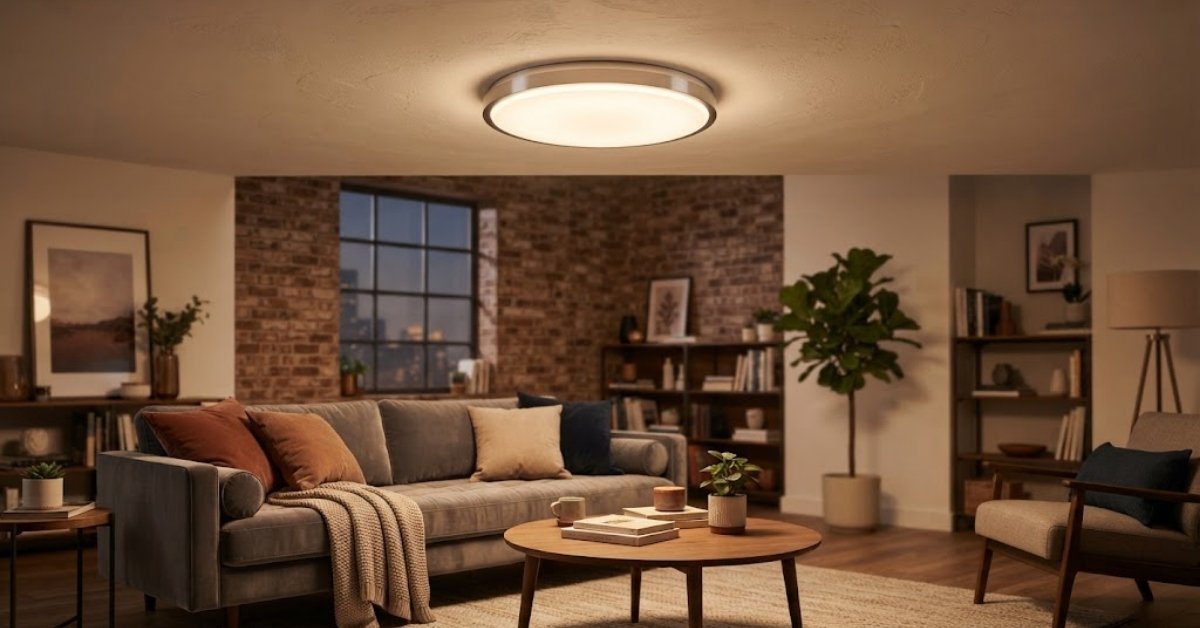
Staring at your ceiling and wondering which light won’t look out of place? Worried a fixture will clash with your cabinet handles, or crowd a low ceiling?The short answer: flush mount lights sit snug against the ceiling, and the right style depends on three things. Your room’s look, your ceiling height, and the finish you already have on faucets, hardware, and furniture.
Pick a classic shape for structure, a modern profile for calm, and then match the glass, metal, and materials to the room. Below, you’ll see how each style behaves in real homes, plus size rules, bulb tips, and answers to common questions.
Classic Forms Add Lasting Structure

Traditional flush mount lights bring order to a room. Think of a round drum or a gently curved dome ceiling light with a trim ring that echoes the crown molding around it.
These classic light fixtures work because their shapes feel familiar. A round ceiling light over a dining nook or a square ceiling light in a hallway gives the space a clear center, much like a rug anchors a seating area.
Picture a formal entry with wall paneling and a pale ceiling. A decorative glass fixture with a slim bronze finish rim fits right in and never shouts for attention. If your home has historic architectural elements, this is the safest route to timeless design.
Modern Profiles Preserve Visual Calm
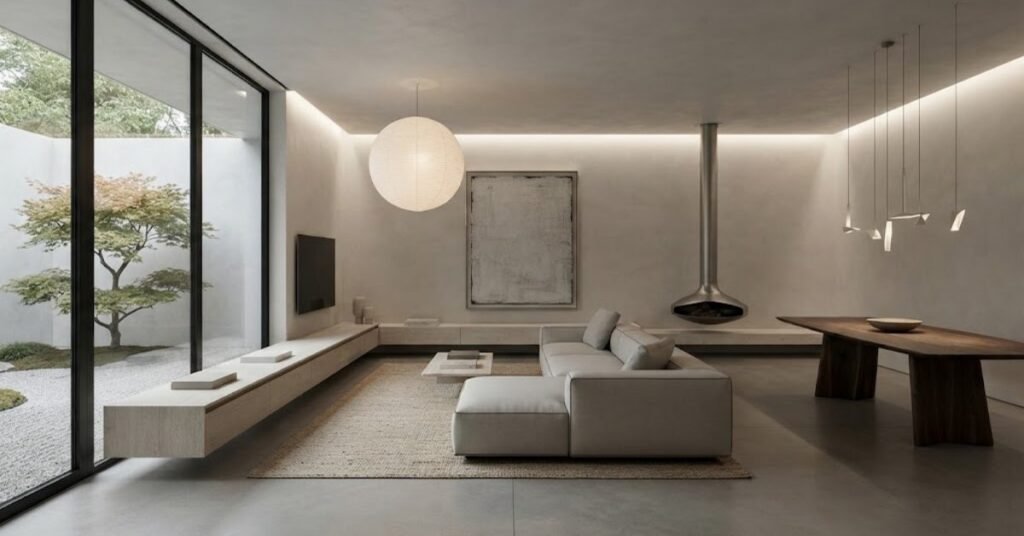
Modern flush mount lights keep things quiet. A slim-profile ceiling light with clean edges and a matte black finish or white finish fades into the ceiling and lets your furniture take the spotlight.
Minimalist ceiling lights and geometric light fixtures suit neutral interiors best. A thin disc, a squared panel, or a simple ring adds visual balance without clutter.
Living in a small apartment? A shallow-profile fixture saves both visual and physical space. You get even ambient lighting, and nothing hangs low enough to make a low-ceiling room feel squeezed.
Glass Styles Shape Light and Mood
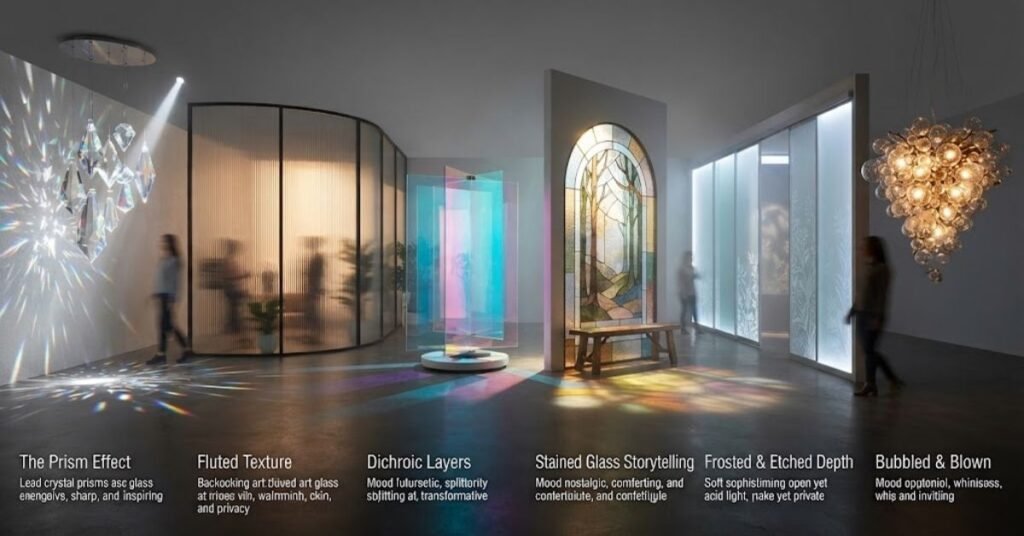
Glass decides how your light feels. Opal glass gives a milky, even soft glow, while clear glass shows the bulb and creates a sharper, brighter look.
Frosted glass sits in the middle and cuts glare without hiding the shape of the fixture. Seeded glass adds tiny bubbles that sparkle, ribbed glass gives soft vertical lines, etched glass carries a subtle pattern, and faceted glass throws playful reflections across the ceiling.
Ask yourself one question: do you want to see the bulb? If not, pick opal or frosted for diffused illumination. If you love glass texture, go with seeded or ribbed and enjoy how the pattern shifts as daylight changes.
Metal Finishes Connect Interior Details
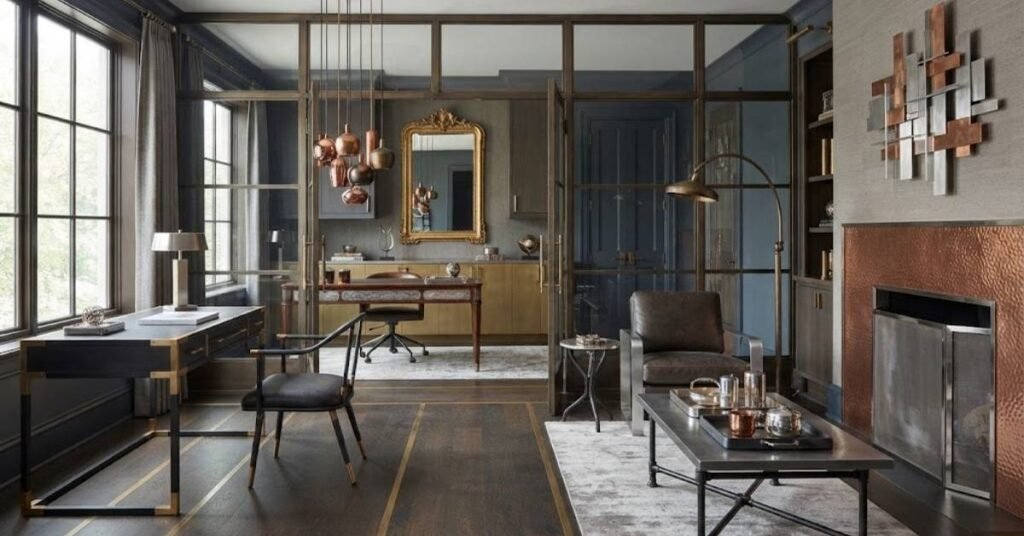
A fixture’s finish links it to everything else in the room. Warm brass and aged brass bring a mellow, lived-in feel, while a bronze finish reads deeper and more grounded.
Polished nickel and other cool-toned finishes feel crisp and clean. Matte black gives sharp contrast, and white blends into the ceiling so the shape does the talking.
Take a quick look at your faucet finishes, cabinet handles, and exposed hardware. Pick one dominant metal finish, then add a secondary metal finish as an accent. That simple rule keeps mixed-metal interiors from looking random.
Natural Materials Create Warm Character
Natural materials soften a room fast. A wood ceiling light or a fixture with wooden features adds warmth, especially above wood flooring and wooden cabinetry.
Woven materials and a linen lampshade bring natural textures without feeling heavy. Stone-inspired materials add a calm, earthy note to rooms with stone surfaces, like a kitchen with a honed counter.
Imagine neutral walls in cream tones, a walnut wood table, and a basket of folded throws in the corner. A fixture with a natural shade ties those organic design elements together without any extra effort.
Style Guide for Common Interiors
Not sure where to start? Match your interior design style to a fixture type, and you’ll land close on the first try.
| Interior Style | Fixture Shape | Glass or Shade | Finish |
| Farmhouse interior style | Drum or dome | Seeded glass | Aged brass or bronze |
| Coastal interior style | Round, light and airy | Opal glass or linen | White or polished nickel |
| Scandinavian interior style | Slim, minimalist disc | Opal glass | White or pale wood |
| Industrial interior design | Geometric, low-profile | Clear glass | Matte black |
| Transitional interior design | Simple drum | Frosted glass | Brushed nickel or brass |
| Traditional interior design | Dome or decorative glass | Etched or faceted glass | Bronze or warm brass |
| Contemporary interior design | Slim square or round | Opal glass | Matte black or nickel |
Treat the table as a starting point, not a rulebook. Rooms with crown molding, classic furniture, and rich upholstery lean traditional, while casual interiors with contemporary furnishings lean clean and light.
How to Pick the Right Size for Your Ceiling
Here’s an easy rule. Add your room’s length and width in feet, and the total gives you the flush mount light size in inches. A 12 by 14 foot room, for example, suits a fixture around 26 inches wide.
Ceiling height matters just as much. With a standard 8 foot ceiling, a flush design keeps plenty of ceiling clearance, and most guides suggest keeping the bottom of any fixture at least 7 feet above the floor.
Don’t forget the canopy size in older homes. A wide canopy can hide marks left by a previous fixture, but check that it fits over your junction box before you buy.
Bulbs, Dimmers, and Light Output
Bulb requirements are printed on the fixture label, so read it first. Stay under the maximum wattage, and choose energy-efficient LED bulbs rated for enclosed fixtures, since heat builds up behind glass.
Planning on dimmable ceiling lights? Check dimmer compatibility before you buy, because a mismatch causes flicker or a faint buzz. A quick look at the bulb box and the dimmer’s spec sheet saves a return trip.
As a rough guide, bedrooms need around 10 to 20 lumens per square foot, while kitchens often want 30 to 40. Pair your ceiling fixture with lamps for layered lighting, and you’ll get light output that feels comfortable instead of flat.
Where Each Style Works Best
Every room asks something different from its ceiling light. Here’s how the styles play out in common spaces.
- Bedroom lighting: Choose opal glass or a linen shade for soft glow and glare control. A dimmer makes modern bedroom lighting feel calm at night.
- Kitchen lighting: Go brighter with clear or lightly frosted glass, and match the finish to your cabinet handles.
- Entryway and hallway lighting: A drum or dome works well here. In a stairwell or corridor, check the clearance first.
- Office and guest room lighting: Pick diffused illumination to avoid screen glare.
- Mudroom, utility room, cabin, and loft lighting: Rugged industrial flush mount lights or rustic flush mount lights handle the wear.
Installation Basics and Safety
Good lighting installation starts with the installation requirements on the box. Check the approved location rating too, because bathrooms, covered porches, and some laundry areas need a damp-rated fixture.
Turn off power at the breaker, then confirm the fixture mounting box can support the weight. Heavy glass or wood fixtures need a sturdy box. If you see old wiring or aren’t sure about any step, call a licensed electrician.
Conclusion
Great flush mount light designs start with your room, not the catalog. Match the shape to your interior design style, choose a glass that suits the mood, and echo one dominant metal finish from nearby hardware.
Add the right size, bulb, and dimmer, and your ceiling stops being an afterthought. It becomes the quiet focal point lighting that pulls everything together.Which style are you leaning toward? Drop your room type in the comments, share this guide with a friend who’s stuck on the same decision, and tell us what you’d like covered next.
FAQs
What Is Flush Mount Lighting?
Flush mount lighting attaches directly to the ceiling with no stem, chain, or rod. The fixture sits close to the surface, which makes it a practical pick for most residential ceiling lights and any room where headroom matters.
Are Flush Mount Lights Good for Low Ceilings?
Yes, they’re often the best choice. A low-profile ceiling fixture keeps you from bumping into it and avoids a cramped look, so it’s ideal for low-ceiling lighting in hallways, basements, and small bedrooms.
What’s the Difference Between Flush Mount and Semi-Flush Mount Lights?
A flush mount sits tight against the ceiling. Semi-flush mount lights drop a few inches on a short stem, which gives more presence and layered illumination but needs more ceiling clearance.
What Size Flush Mount Light Do I Need?
Add the room’s length and width in feet, and use that number as the diameter in inches. Then adjust for ceiling height and furniture. A bigger room or a tall ceiling can take a larger, bolder fixture.
Are Flush Mount Lights Suitable for a Bedroom?
Absolutely. Choose opal or frosted glass for a soft glow, and add a dimmable bulb. Warm light tones help the room feel restful before sleep.
Are Flush Mount Lights Suitable for Kitchens?
Yes, especially in smaller kitchens. Pick a brighter bulb, easy-to-wipe glass shades, and a finish that matches your cabinet handles and faucet so the room looks put together.
What Kind Of Glass Is Best For A Flush Mount Light?
It depends on the mood you want. Opal glass gives the most even diffusion and the least glare, frosted glass is a flexible middle ground, and seeded or clear glass adds sparkle or brightness.
Should a Flush Mount Light Coordinate with Other Metal Finishes?
It should feel related, but it doesn’t need to match exactly. Pick a dominant metal finish, repeat it in one or two places, and let a secondary finish add contrast. That balance makes mixed-metal interiors look planned.

Jack Danniel is a flower enthusiast, writer, and experienced SEO expert passionate about creating helpful content.
With years of experience in SEO and content strategy, he shares engaging and informative insights about flowers.
His goal is to make floral information easy to understand while helping readers discover the beauty of nature.