Quick Answer: Best Purple Flowers Perennials For The Garden
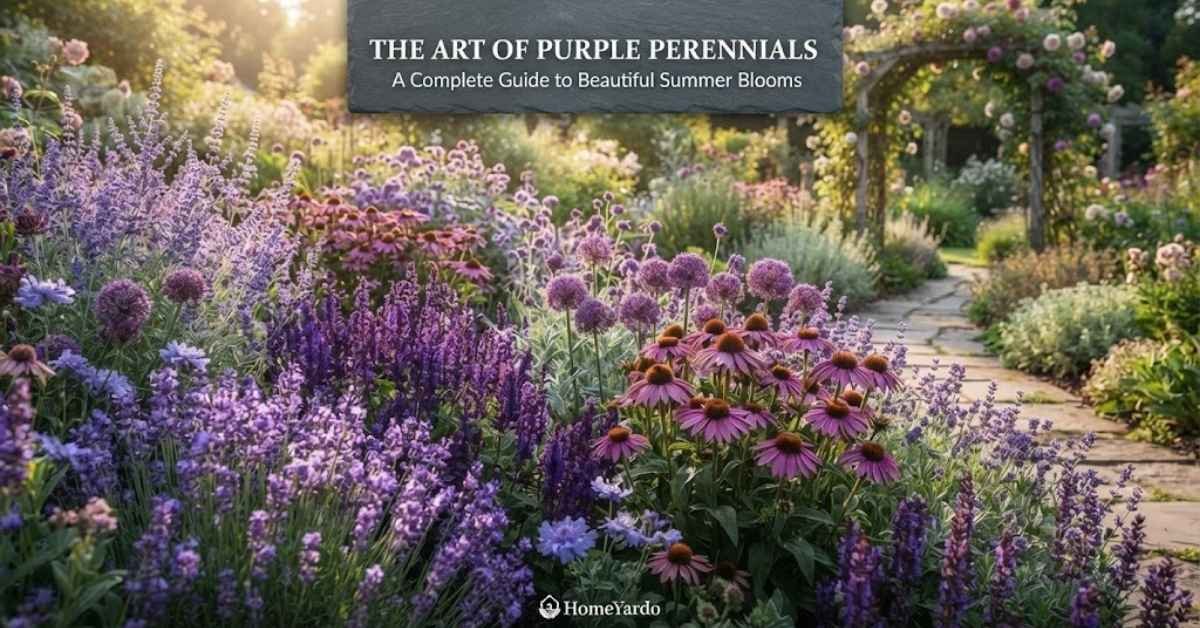
Want the short version? Salvia, Russian Sage, Purple Coneflower, and Bearded Iris are the easiest purple perennials for most gardens.
They handle full sun, come back reliably, and don’t demand constant fussing.
If you’ve got shade instead, Hellebore and Hosta carry the color without a single hour of direct sun.
At A Glance: 65 Purple Flower Perennials
Below is a working list you can scan before you dig into details further down.
Every plant here is a genuine perennial flower, not a one-season annual pretending to be tough.
We’ve grouped them by how you’ll actually use them, whether that’s a border, a container, or a wild pollinator patch.
Plant Data Verification
Every plant name and botanical name in this guide was cross-checked against grower catalogs and extension publications.
Bloom times shift a bit depending on your microclimate, so treat these as solid averages, not gospel.
When in doubt, your local extension service or a nursery label will confirm what’s accurate for your exact zip code.
What Counts As A Purple Perennial?
Not every purple bloom you see at the garden center is built to last. Some are one-and-done.
Here’s how to tell the difference before you spend money on something that dies in October.
True Perennials
A true perennial dies back and returns from the same root system year after year without replanting.
Think Salvia, Coneflower, or Bearded Iris. Plant once, enjoy for a decade.
These plants build stronger root establishment each season, which is why year two always looks better than year one.
Tender Or Zone-Dependent Perennials
Some plants are perennial in warm zones but act like annuals up north. Agapanthus is a good example.
In Zone 9 it comes back on its own. In Zone 5, it needs a pot and a garage for winter.
Always check the hardiness zone range on the tag before assuming a plant will survive your winter.
Bulbs, Corms, Tubers, Vines, And Shrub-Like Perennials
Not every perennial grows from a simple root ball. Some come from bulbs, corms, or tubers.
Crocus and Hyacinth grow from bulbs. Clematis is a perennial vine. Lilac and Butterfly Bush are woody, shrub-like perennials.
Each type behaves differently underground, so planting depth and spacing rules change depending on which one you’re working with.
How To Choose Purple Flowers Perennial
Picking the right plant isn’t about what looks pretty in a photo. It’s about matching the plant to your actual yard.
Get this part right and everything downstream, watering, blooming, survival, gets easier.
Choose By Sun Or Shade
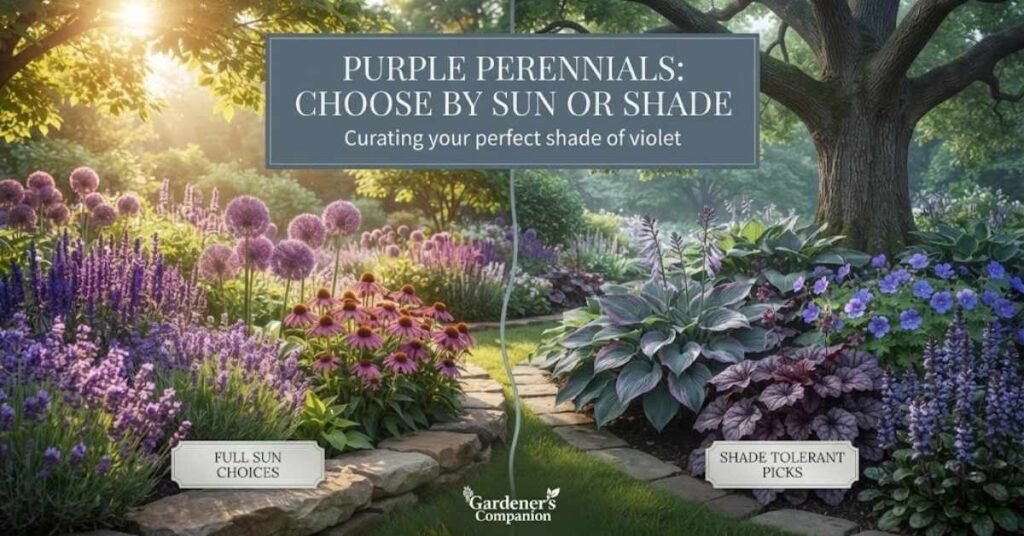
Full sun perennials like Russian Sage need six or more hours of direct sunlight daily to bloom well.
Shade-loving plants like Hosta and Lungwort will scorch and sulk in that same spot.
Watch your yard for a full day before planting. Light patterns lie if you only glance at noon.
Choose By Height
Tall perennials like Delphinium and Joe Pye Weed belong at the back of a bed, not the front.
Low-growing perennials like Creeping Phlox and Ajuga work as ground cover or edging along a path.
Mixing heights badly is the number one reason borders look flat instead of full.
Choose By Bloom Time
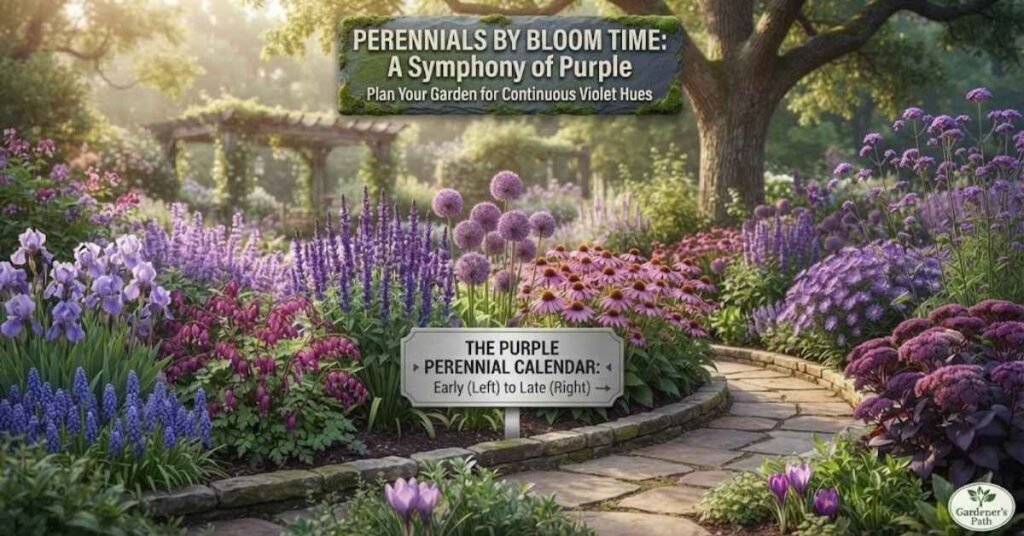
Some purple perennials bloom in April, others wait until September. Timing your bloom overlap matters.
If everything flowers in June, your garden goes bare for the rest of summer.
Stagger spring bloom, summer bloom, and fall bloom varieties so something is always showing color.
Choose By Soil And Water Needs
Well-drained soil suits Lavender and Sea Holly, which rot fast in soggy ground.
Moist soil lovers like Astilbe and Cardinal Flower need consistent water or they wilt within days.
Match the plant to your existing soil drainage, not the other way around.
65 Perennials To Grow In Beds, Borders, And Containers
Here’s the full rundown, organized so you can jump straight to what fits your space.
Full Sun Purple Perennials
Lavender, Salvia nemorosa, Salvia yangii (Russian Sage), Catmint, Coneflower, Allium, Sea Holly, Stokes’ Aster, Scabiosa, and Penstemon all thrive in blazing sunny borders.
These plants tolerate lean soil and heat without complaint, which makes them low-drama choices for hot front yards.
Tall Perennials Plants For Back Borders
Delphinium, Lupine, New England Aster, Joe Pye Weed, Monkshood, Garden Phlox, Ironweed, and Hollyhock all reach three feet or taller.
Plant these toward the back border so shorter flowers up front don’t get swallowed.
Small Purple Perennials For Edging
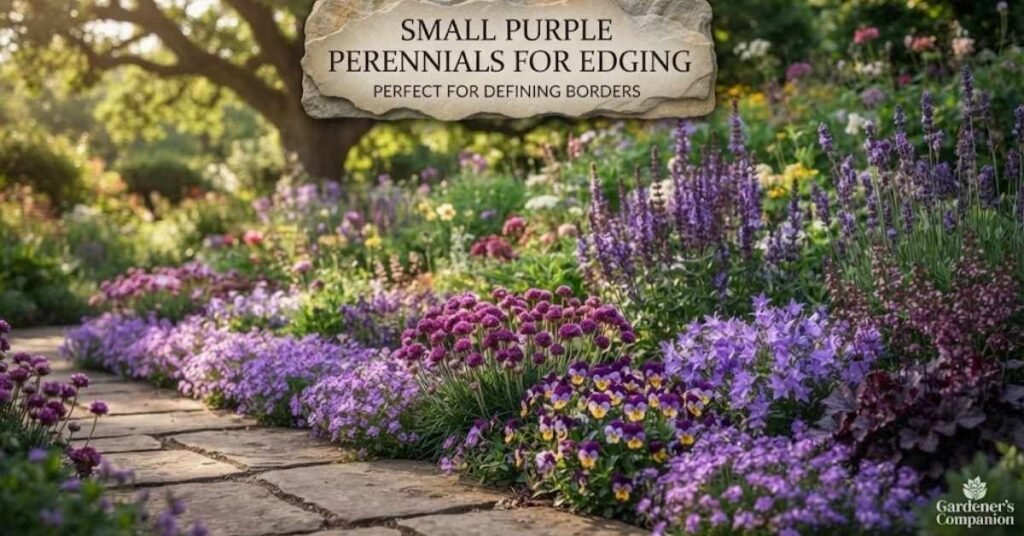
Creeping Phlox, Aubrieta, Dalmatian Bellflower, Dwarf Iris, Pasque Flower, Self Heal, Veronica, and Purple Ice Plant hug the ground nicely.
They’re ideal edging plants for lining a garden path or the front row of a bed.
Purple Shade Perennials And Woodland Flowers
Ajuga, Common Violet, Astilbe, Hosta, Hellebore, Lungwort, Spotted Dead Nettle, and Corydalis are true shade perennials.
These fill in woodland gardens and dim corners where sun-lovers would simply fail.
Long Blooming Purple Perennials
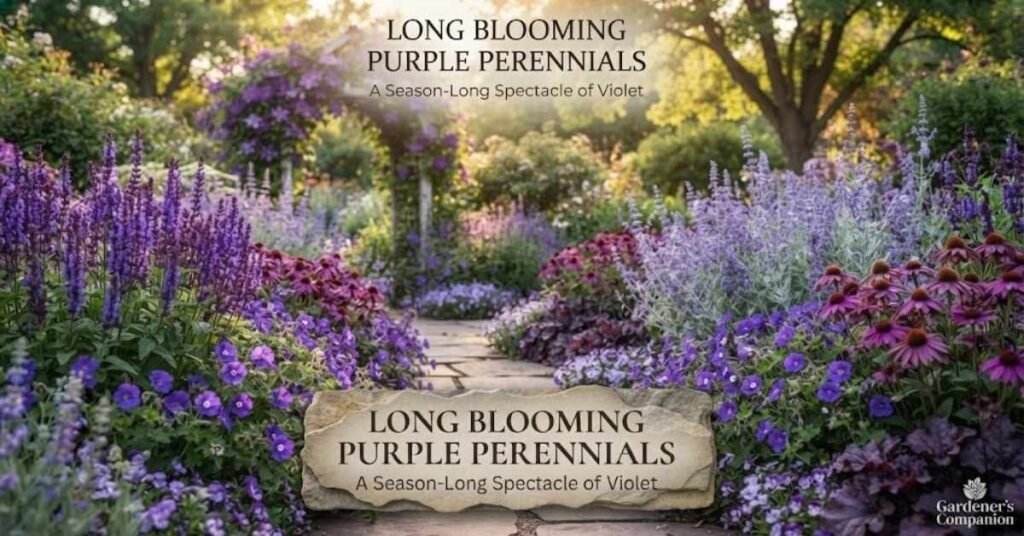
Salvia, Catmint, Scabiosa, Veronica, and Balloon Flower keep flowering for months if you deadhead regularly.
These earn their spot as genuine long-blooming perennials, giving you way more color per plant.
Purple Spring Perennials
Columbine, Jacob’s Ladder, Woodland Phlox, Virginia Bluebells, Crocus, and Hyacinth open the gardening season early.
They bring early spring flowers before most other plants have even woken up.
Native, Pollinator, And Special Use Perennials
Wild Bergamot, Blue Vervain, Purple Prairie Clover, Baptisia, Blazing Star, and Obedient Plant are proven native perennials for wildlife.
Bees, butterflies, and even hummingbirds treat these like a buffet line.
Best Perennials By Growing Conditions
Your yard’s actual conditions decide what survives, so here’s the breakdown by real-world setup.
Purple Perennials Full Sun
Russian Sage, Coneflower, Allium, and Globe Thistle handle heat and drought better than almost anything on this list.
Purple Flower For Shade
Hellebore, Pulmonaria, and Toad Lily bloom happily in filtered light under canopy trees.
Low-Growing Purple Plants, Perennials, And Ground Cover
Ajuga, Creeping Phlox, and Veronica peduncularis spread low and dense, choking out weeds as a bonus.
Tall Purple Flowers Perennial
Delphinium, Joe Pye Weed, and Meadow Rue add vertical color that draws the eye upward in a flat border.
Bloom Time Planner For Purple Flowers Perennials
Planning around flowering season keeps your garden from going flat halfway through summer.
Perennial Purple Spring Flowers
Crocus, Hyacinth, Pasque Flower, and Virginia Bluebells kick things off in March and April.
Purple Perennials That Bloom All Summer
Salvia, Catmint, Coneflower, and Phlox carry the garden from June through August without a break.
Purple Fall Blooming Perennial Flowers
New England Aster, Hardy Ageratum, and Hardy Chrysanthemum deliver late-season color right up until frost.
Best Perennials By Zone
USDA hardiness zones determine what actually survives your winter, not just what looks nice at the store.
Purple Perennials Zone 4
Baptisia, Delphinium, and Siberian Iris shrug off brutal cold without protection.
Purple Perennials Zone 5
Coneflower, Salvia, and Garden Phlox handle Zone 5 swings between hard freezes and warm spells.
Purple Perennials Zone 6
Russian Sage, Lavender, and Catmint do well here, though winter drainage still matters in wet years.
Climate Notes For Better Plant Survival
Freeze-thaw cycles kill more perennials than actual cold does. Roots heave up and dry out.
A layer of mulching after the ground freezes protects roots better than mulching too early.
Humidity and summer heat stress Lavender and Sea Holly more than winter cold ever does, so good airflow matters just as much as sun.
Low Maintenance Purple Perennials For Beginners
If you’re new to gardening, start with Salvia, Catmint, and Coreopsis paired nearby for contrast.
These beginner perennials forgive missed watering and irregular pruning without sulking or dying.
You’ll build confidence fast when your first plants actually survive the winter.
Deer-Resistant And Drought Tolerant Purple Perennials
Deer Resistant Purple Perennials
Russian Sage, Catmint, Lavender, and Monkshood have strong scents or toxic compounds deer avoid on instinct.
Drought Tolerant Options
Sea Holly, Globe Thistle, and Purple Ice Plant store water efficiently, making them solid choices for dry borders.
Purple Perennial Flower Identification Guide
Not sure what’s already growing in your yard? Here’s how to narrow it down fast.
Identify By Flower Shape
Flower spikes point to Salvia or Veronica. Bell-shaped flowers suggest Campanula. Daisy-like flowers mean Aster or Coneflower.
Identify By Height
Anything under a foot is likely an edging plant like Aubrieta. Anything over three feet leans toward Delphinium or Joe Pye Weed.
Identify By Bloom Season
Early bloomer with a bulb underground? Probably Crocus or Hyacinth. Late bloomer with daisy petals? Likely Aster.
Purple Foliage Perennials To Pair With Purple Flowers
Purple foliage plants like Coral Bells and Purple Shamrock add color even when nothing is blooming, thanks to consistent leaf texture and tone.
Purple Flowers Often Confused With Purple Flowers
Annuals Or Tender Plants
Petunias, Calibrachoa, and Pansies look like perennials in bloom photos but die completely after frost.
Shrubs, Trees, And Vines
Lilac, Wisteria, and Butterfly Bush are woody plants, not herbaceous perennials, even though catalogs sometimes lump them together.
How To Design A Garden With Purple Perennials
Best Color Pairings
Purple pairs beautifully with yellow flowers like Black-eyed Susan or white flowers like White Phlox for contrast that pops.
Best Places To Use Purple Flower Perennials
Use tall varieties along a fence or trellis, and low varieties along walkways or slopes where erosion is a concern.
Sample Purple Perennial Combination
Try Russian Sage behind Coneflower, with Creeping Phlox spilling over the front edge. Layered, textured, and low-fuss.
How To Plant Purple Perennials
Planting Steps
- Dig a hole twice the width of the root ball
- Loosen roots gently before placing in the hole
- Backfill with native soil, avoiding heavy amendment
- Water deeply right after planting
- Add mulch, keeping it away from the crown
How To Care For Purple Flowering Perennials
Watering
Deep watering less often beats shallow daily watering, which encourages weak, surface-level roots.
Deadheading And Pruning
Deadheading spent blooms on Salvia and Scabiosa pushes out a fresh flush within weeks.
Dividing And Spacing
Division every three to four years keeps clumps like Hosta and Iris healthy instead of overcrowded.
Buying Checklist For Purple Perennial Plants
- Check the plant tag for zone and mature spread
- Inspect for healthy roots and healthy stems
- Avoid pots with visible pest damage or spotted leaves
- Confirm shipping season if buying from an online plant buying source
- Ask about the return policy before checking out
Common Mistakes To Avoid
Planting too deep smothers the crown and invites root rot. Overwatering does the same thing.
Ignoring plant spacing leads to poor air circulation, which is exactly what invites mildew.
Skipping the zone check is probably the single costliest beginner mistake on this entire list.
Conclusion
Purple perennials reward you for years with almost no repeat effort once they’re settled in.
Match sun, soil, and zone correctly, and the rest genuinely takes care of itself.
Start small, watch what thrives, then expand your mixed borders from there.
FAQ’s
What Are Purple Perennials?
They’re flowering plants with purple blooms that return yearly from the same root system without replanting.
Are Purple Perennials Annual Or Perennial?
Most listed here are true perennials, though a few, like Agapanthus, act as tender perennials in cold zones.
Do Purple Perennials Come Back Every Year?
Yes, as long as they’re hardy for your zone and planted in suitable soil and light.
How Often Do Purple Perennials Bloom?
Most bloom once for several weeks, though long bloomers like Salvia can flower for months with deadheading.
When Should You Plant Purple Perennials?
Early spring or early fall, giving roots time to settle before extreme heat or cold arrives.
Which Purple Perennials Bloom The Longest?
Salvia, Catmint, and Veronica consistently outlast most other purple bloomers in the garden.
What Purple Perennials Grow In Shade?
Hosta, Hellebore, Pulmonaria, and Astilbe all handle bright shade or filtered light well.
What Are The Best Purple Perennials For Beginners?
Salvia, Catmint, and Coneflower forgive mistakes and still bloom reliably.
Which Purple Flowers Attract Pollinators?
Wild Bergamot, Coneflower, and Blazing Star are magnets for bees, butterflies, and hummingbirds.
What Colors Go With Purple Flowers In A Garden?
Yellow, white, and silver foliage all create strong, balanced contrast against purple blooms.

Jack Danniel is a flower enthusiast, writer, and experienced SEO expert passionate about creating helpful content.
With years of experience in SEO and content strategy, he shares engaging and informative insights about flowers.
His goal is to make floral information easy to understand while helping readers discover the beauty of nature.