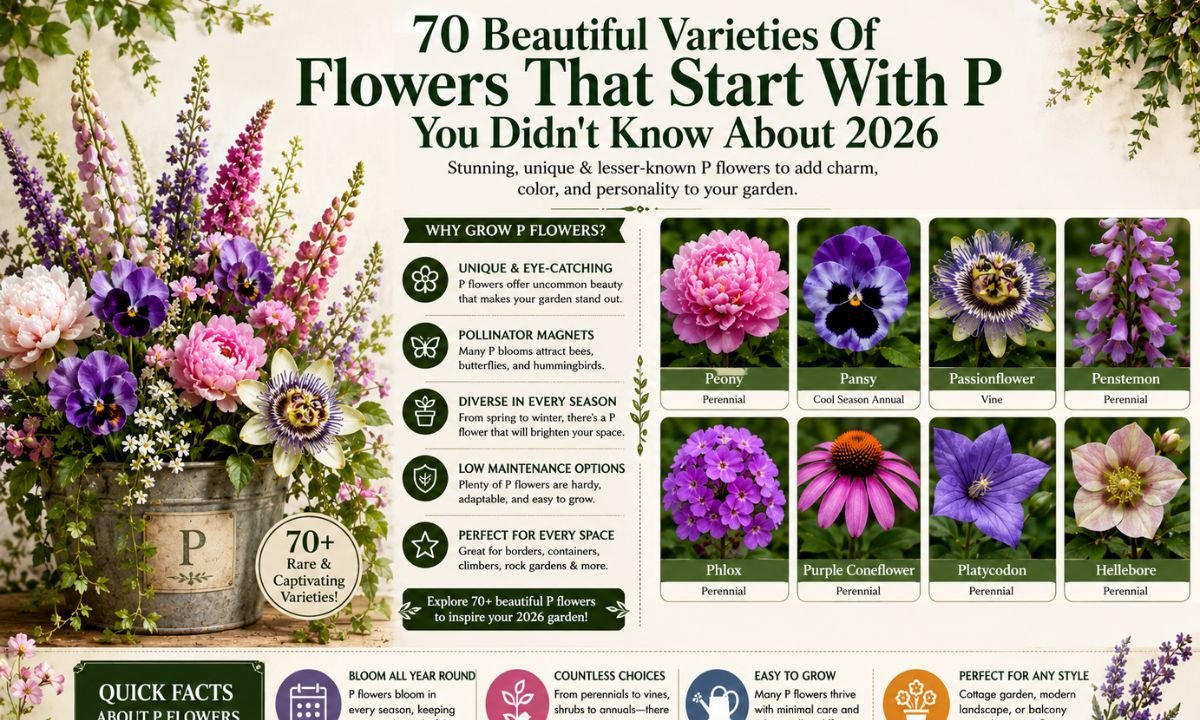
Peonies, petunias, poppies, and pansies top the list of the most loved flowers that start with P. These blooms show up in gardens, bouquets, and front porches across the country every single spring. Gardeners pick them for their color range, easy care, and long bloom windows.
Beyond these four, you’ll find dozens more options like phlox, protea, plumeria, and primrose. Each one brings something different to a yard, whether that’s fragrance, drought tolerance, or a splash of tropical color. This guide walks through 70 total varieties so you can find the right fit for your space.
70 Flowers That Starting With P
This list covers everything from common backyard staples to rare finds florists love. You’ll see garden classics next to houseplants and even a few pond dwelling blooms. Every entry includes a quick note on what makes it worth planting.
The goal here isn’t just a name drop. Each flower gets a short explanation of its look, care needs, or best use so you can actually decide what belongs in your garden this year.
Master Comparison Table For Flowers Starting With P
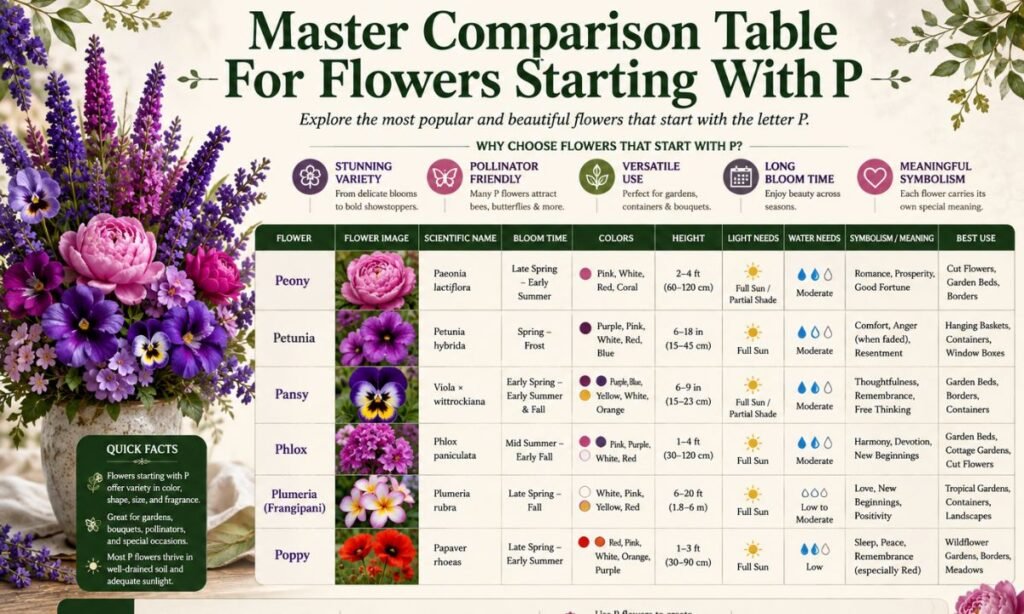
| Flower Name | Type | Bloom Season | Sun Needs | Common Use |
| Peony | Perennial | Late Spring | Full Sun | Border, Cut Flower |
| Pansy | Annual | Cool Season | Partial Shade | Bedding |
| Petunia | Annual | Summer | Full Sun | Containers |
| Poppy | Annual/Perennial | Spring/Summer | Full Sun | Meadow, Border |
| Primrose | Perennial | Early Spring | Partial Shade | Woodland Garden |
| Phlox | Perennial | Summer | Full Sun | Border |
| Protea | Shrub | Winter/Spring | Full Sun | Cut Flower |
| Passion Flower | Vine | Summer | Full Sun | Trellis, Climber |
| Plumeria | Tree/Shrub | Summer | Full Sun | Tropical Garden |
| Peace Lily | Houseplant | Year Round | Low Light | Indoor Decor |
This table gives a fast snapshot before you dive into the full breakdown below.
Types Of Flowers That Begin With P
P flowers span nearly every category a gardener could want. You’ll find annuals that finish their life cycle in one season, perennials that return year after year, and even climbing vines that dress up a fence or trellis.
Some varieties thrive indoors as houseplants while others belong outside in full sun. This range makes P flowers a smart pick no matter your climate, garden size, or experience level.
Garden Bedding Flowers
Bedding flowers fill garden beds with continuous color through the growing season. Petunias and pansies lead this group thanks to their compact growth and nonstop blooms.
These plants work well along walkways, under trees, or as a border edge. Most bedding varieties need regular deadheading to keep flowers coming.
Perennial Border Flowers
Perennial border picks come back every year without replanting. Peonies, phlox, and coneflowers anchor this category with strong stems and reliable blooms.
Gardeners often mix heights and bloom times to keep borders interesting from spring through fall. These plants also tend to need less water once established.
Vines And Climbers
Passion flower and pink jasmine bring vertical interest to any yard. These climbers wrap around trellises, arbors, and fences with minimal training needed.
Most climbing P flowers grow fast in warm weather and reward patience with fragrant or dramatic blooms. They work great for covering bare walls quickly.
Indoor Flowering Plants
Peace lilies and phalaenopsis orchids dominate the indoor plant world. Both tolerate low light and bloom for weeks at a time indoors.
These plants suit apartments, offices, or any space without direct sunlight. Regular watering and occasional feeding keep them blooming reliably.
Wildflowers And Native Style Picks
Poppies and purple coneflowers bring a natural, meadow style look to open spaces. These flowers self seed easily and attract pollinators without much fuss.
Native style gardens benefit from these low maintenance choices since they adapt well to local rainfall and soil conditions. Bees and butterflies flock to them.
Borderline Blossoms And Flowering Plants
A few plants on this list sit between flower and shrub, like protea and plumeria. These woody bloomers offer bold texture next to softer perennials.
Including a mix of true flowers and flowering shrubs adds depth to garden design. It also extends interest beyond just the bloom itself.
Common Flowers That Beginning With P
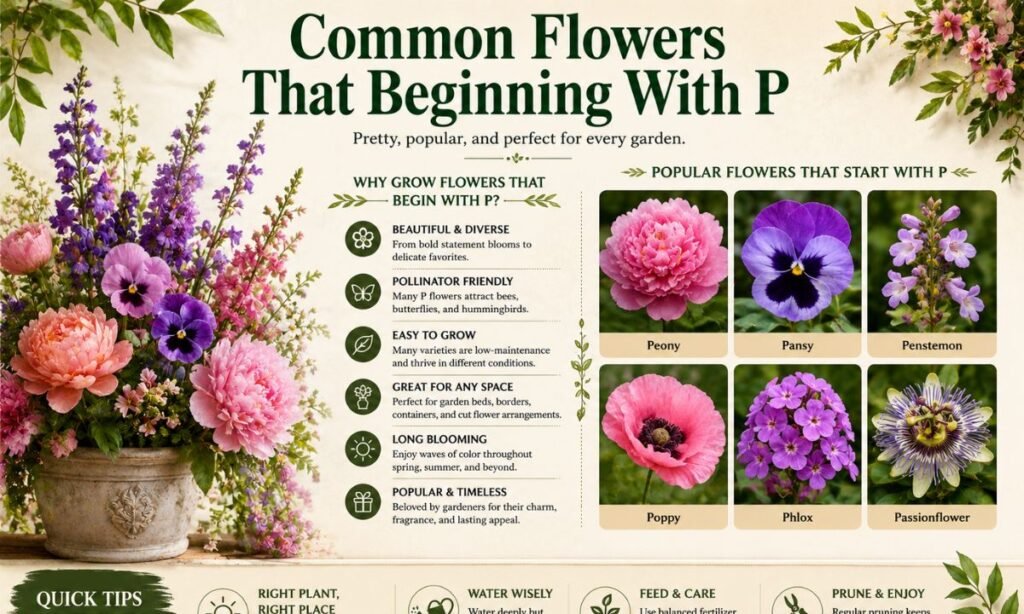
The most common P flowers show up in nearly every plant nursery across the country. Peonies, petunias, and pansies are so widespread that most gardeners plant at least one every year.
These flowers earn their popularity through easy care and dependable blooms. They also pair well with almost any garden style, from cottage gardens to modern minimal landscapes.
Popular Flower Names Starting With P
Peony
Peonies produce large, ruffled blooms in shades of pink, white, and red. They bloom once in late spring but the flowers last for weeks when cut.
Pansy
Pansies show off cheerful faces in nearly every color combination. They thrive in cool weather and often bloom through light frost.
Petunia
Petunias trail beautifully from hanging baskets and window boxes. They bloom nonstop through summer with minimal care beyond regular watering.
Poppy
Poppies open thin, papery petals in bright red, orange, and pink. They grow fast from seed and attract bees throughout their bloom period.
Primrose
Primroses bloom early, often before most other perennials wake up. They prefer shady, moist spots under trees or along garden edges.
Phlox
Phlox produces clusters of star shaped flowers with a light, sweet scent. It spreads well and fills gaps in perennial borders.
Protea
Protea flowers stand out with bold, spiky blooms native to South Africa. They last a long time as dried or fresh cut flowers.
Passion Flower
Passion flower vines produce intricate, exotic looking blooms. They climb fast and often attract butterflies to the garden.
Plumeria
Plumeria trees produce fragrant, tropical flowers used in leis. They thrive in warm climates and need protection from frost.
Peruvian Lily
Peruvian lily, also called alstroemeria, offers speckled petals in vibrant colors. It works beautifully as a long lasting cut flower.
Persian Buttercup
Persian buttercup, or ranunculus, produces layered petals resembling small roses. Florists love it for bouquets thanks to its long vase life.
Portulaca
Portulaca, known as moss rose, thrives in hot, dry conditions. Its succulent leaves and bright blooms suit rock gardens well.
Penstemon
Penstemon produces tubular flowers that hummingbirds love. It handles drought well once roots establish in the garden.
Pentas
Pentas form clusters of star shaped flowers that draw butterflies. It blooms continuously through summer heat without much care.
Peace Lily
Peace lily produces white, hood shaped blooms above glossy green leaves. It purifies indoor air while requiring very little light.
Phalaenopsis Orchid
Phalaenopsis orchids bloom for months at a time indoors. Their arching stems carry multiple flowers in white, pink, or purple.
Poinsettia
Poinsettia is famous for its red bracts during the holiday season. It needs bright light and careful watering to stay healthy indoors.
Pincushion Flower
Pincushion flower, or scabiosa, gets its name from its pin like center. It blooms all summer and works well in cut arrangements.
Platycodon
Platycodon, called balloon flower, opens from puffy buds into star shaped blooms. It suits perennial borders with its unique bud stage.
Pineapple Lily
Pineapple lily produces a spiky bloom resembling a pineapple top. It adds unusual texture to late summer gardens.
Pulmonaria
Pulmonaria, or lungwort, blooms early with spotted leaves and pink to blue flowers. It thrives in shady, woodland style gardens.
Purple Coneflower
Purple coneflower, or echinacea, attracts pollinators with its daisy like blooms. It tolerates drought and poor soil with ease.
Paper Daisy
Paper daisy produces papery, everlasting petals that hold color even when dried. It suits sunny, dry garden spots.
Ptilotus
Ptilotus, also called mulla mulla, features fuzzy, pink plume like flowers. It handles heat and dry soil better than most annuals.
Bouquet And Florist Favorites
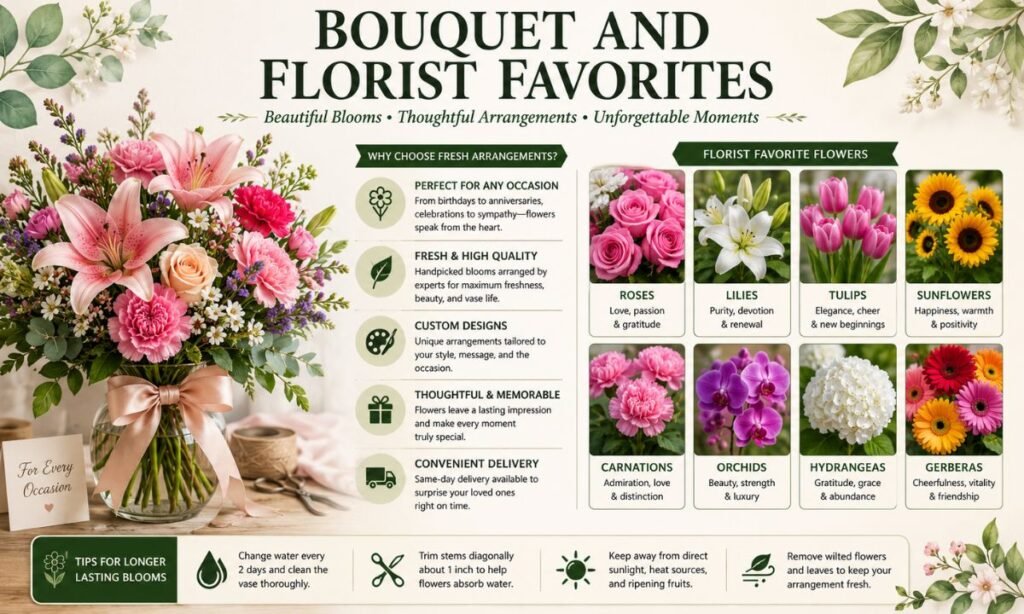
Florists reach for peonies, ranunculus, and protea when building statement bouquets. These flowers hold their shape and color well after cutting.
Peruvian lily and pincushion flower also show up often thanks to their long vase life. Mixing textures like protea’s spiky blooms with soft peony petals creates striking arrangements.
Less Common And Distinctive Picks
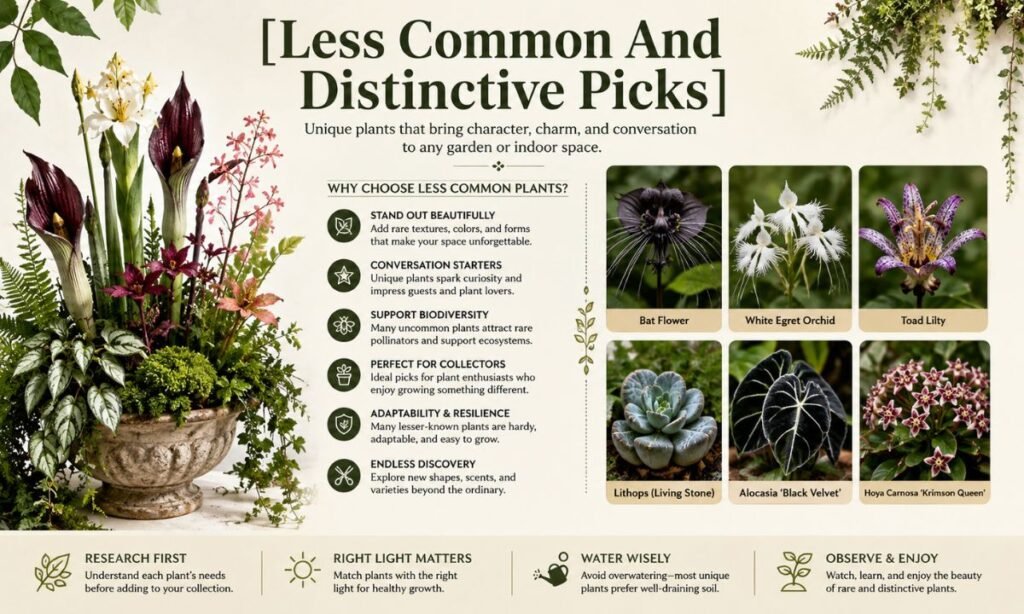
Ptilotus, pineapple lily, and paper daisy rarely appear in typical garden centers. These unusual choices suit gardeners looking to stand out from common landscaping.
Each of these picks brings unique texture or color not found in mainstream flowers. They work well as conversation pieces in a mixed border.
Plants Vs Flowers That Starting With P
Some P names refer to entire plants rather than just the bloom itself, like plumeria and pentas. These distinctions matter when shopping at a nursery since the whole plant, not just a cut flower, is what you’re buying.
Understanding this difference helps set expectations for size, care, and how the plant fits into a garden layout over time.
P Flowers By Color
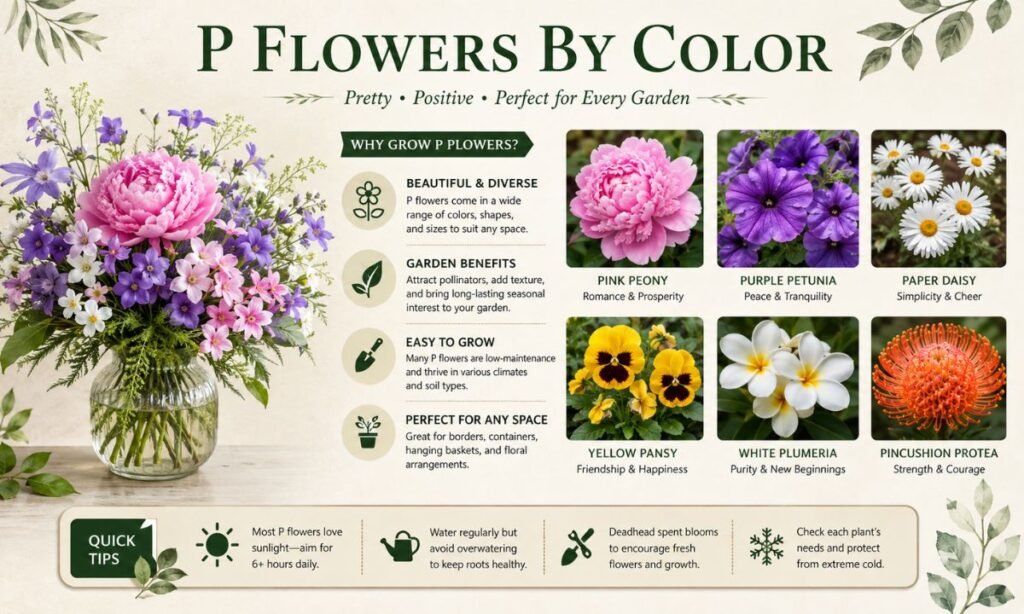
Purple Flowers That Start With P
Purple coneflower, phlox, and Persian buttercup all bring shades of purple to the garden. These varieties pair well with yellow or white blooms for contrast.
Pink Flowers Beginning With P
Peony, petunia, and pulmonaria offer soft to bold pink tones. Pink varieties often read as romantic or cottage style in garden design.
White Flowers Beginning With P
Peace lily, white pansies, and white phlox brighten shady garden corners. White blooms also stand out beautifully in evening light.
Red And Orange Flowers Beginning With P
Red poppies and orange portulaca bring warm, energetic color to beds. These shades work well as focal points against green foliage.
Perennials That Start With P
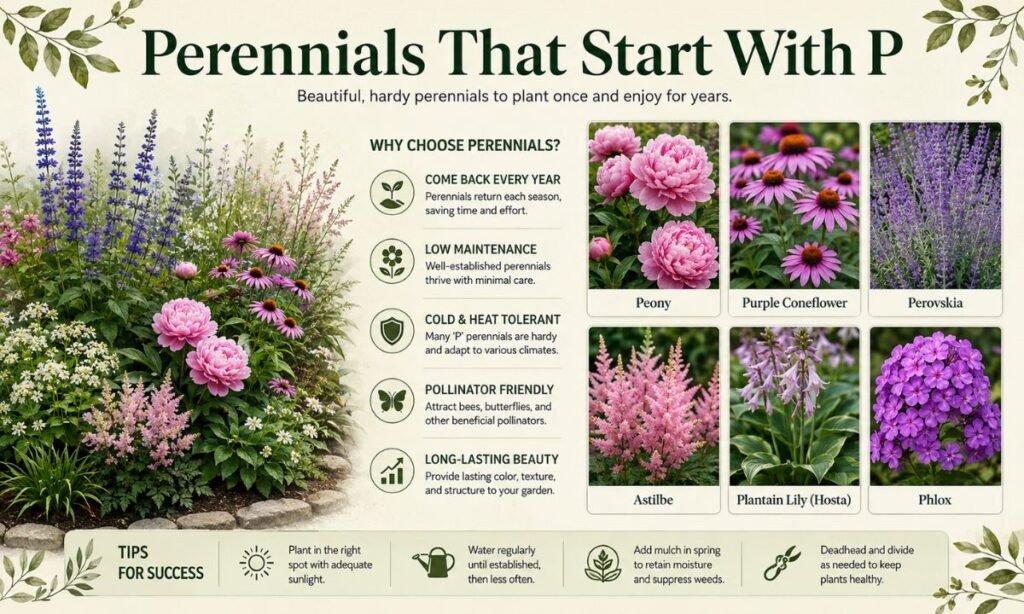
Peony, phlox, penstemon, and purple coneflower all return year after year. These perennials form the backbone of most long term garden plans.
Annual Flowers That Start With P
Petunia, pansy, and portulaca complete their life cycle in one season. Gardeners replant these each year for fresh color.
Indoor Or Protected Space Picks
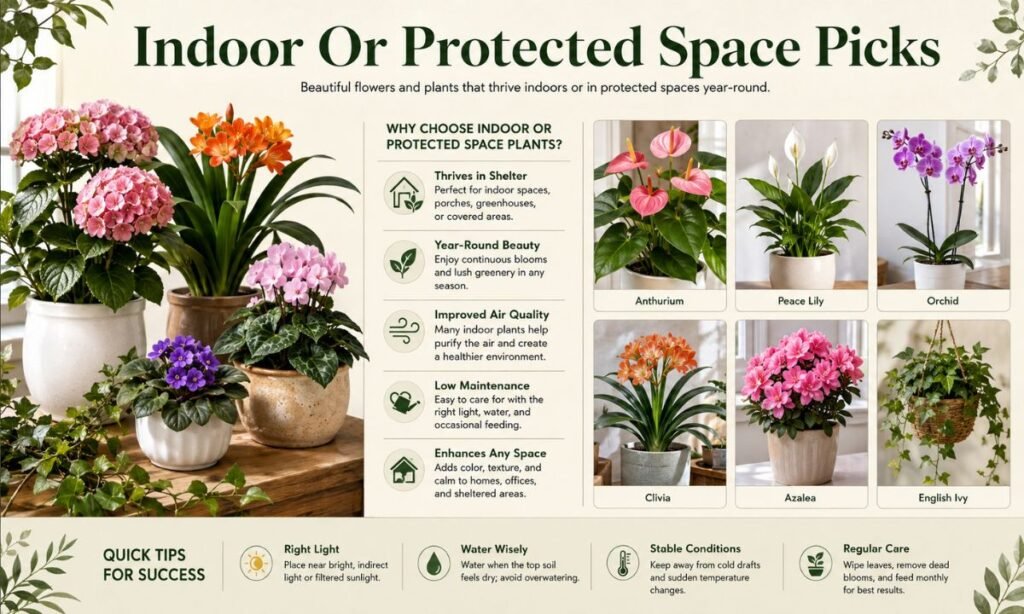
Peace lily, phalaenopsis orchid, and poinsettia thrive indoors or in protected spaces. These picks suit gardeners without much outdoor space.
P Flowers By Bloom Season
Primrose and pulmonaria bloom earliest in spring, followed by peony and poppy in late spring. Petunia, phlox, and pentas carry the garden through summer, while poinsettia closes out the year in winter.
P Flowers By Growing Condition
Best For Full Sun
Petunia, poppy, portulaca, and purple coneflower all need at least six hours of direct sun daily to bloom their best.
Best For Partial Shade
Primrose, pulmonaria, and pansy tolerate or prefer filtered light, making them ideal for garden spots under trees.
Best For Dry Spots
Portulaca, penstemon, and ptilotus handle dry, sandy soil without extra watering once established.
Best P Flowers By Use Case
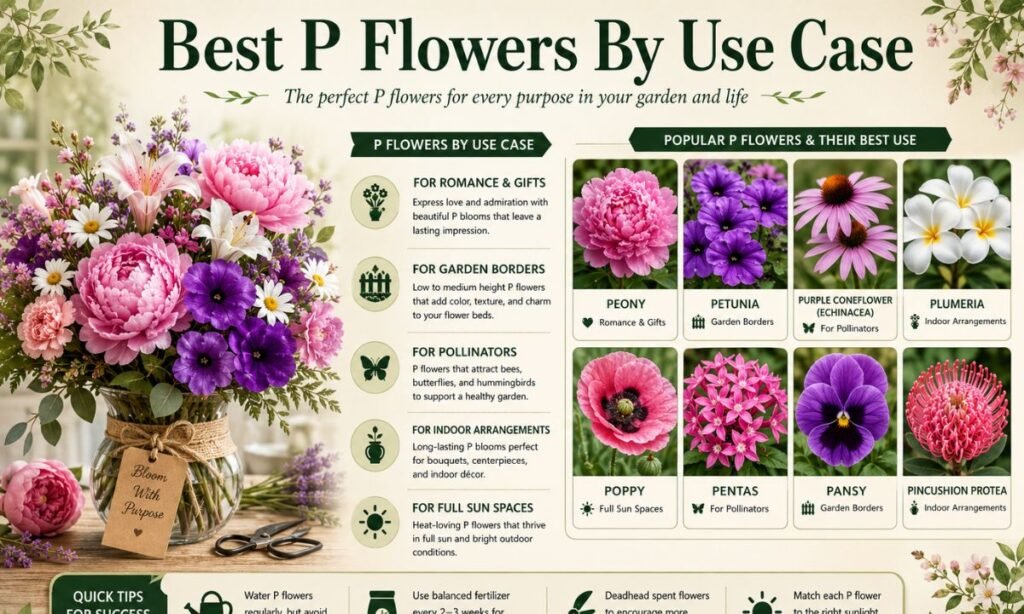
Beginner Friendly Choices
Petunia, pansy, and portulaca forgive missed watering and thrive with minimal care, making them ideal starter flowers.
Fragrant P Flowers
Peony, plumeria, and pink jasmine fill the air with sweet scent, especially in the evening hours.
Pollinator Friendly And Meadow Picks
Poppy, purple coneflower, and pentas draw bees and butterflies throughout the growing season.
Container And Small Space Picks
Petunia, portulaca, and pansy adapt well to pots, window boxes, and small balcony gardens.
Cut Flower And Bouquet Favorites
Peony, ranunculus, and pincushion flower hold up beautifully in vases for a week or longer.
Water And Pond Flower Picks
Pickerelweed stands out as a P flower suited for pond edges and boggy soil, adding vertical purple spikes near water features.
Flower Meanings And Symbolism
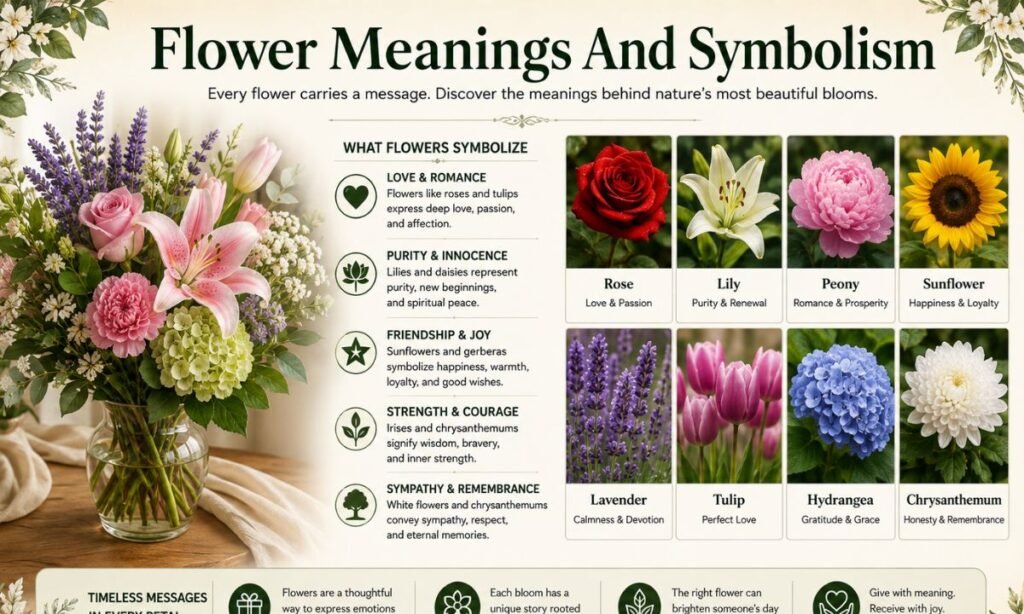
Peonies often symbolize romance and prosperity, while poppies represent remembrance in many cultures. Pansies carry a meaning tied to thoughtfulness, and petunias often represent comfort or resentment depending on the tradition referenced.
Side-by-Side Comparisons
Pansy Vs Petunia
Pansies handle cold better and bloom in cooler months, while petunias thrive in summer heat with a trailing growth habit.
Peony Vs Protea
Peonies offer soft, romantic petals for a short spring window, while protea brings bold, exotic texture with a much longer bloom life.
Primrose Vs Periwinkle
Primrose blooms upright in shady beds, while periwinkle spreads low as a fast growing ground cover.
Poppy Vs Pansy
Poppies grow tall with delicate, papery petals, while pansies stay low and compact with sturdy, patterned blooms.
Primrose Vs Polyanthus
Polyanthus is technically a primrose hybrid, offering larger flower clusters compared to the smaller blooms of standard primrose.
Peace Lily Vs Phalaenopsis Orchid
Peace lily tolerates low light better, while phalaenopsis orchid needs bright, indirect light to rebloom consistently.
Portulaca Vs Petunia
Portulaca handles drought and heat better, while petunia needs more regular watering to keep blooming.
Persian Buttercup Vs Peony
Persian buttercup blooms earlier and offers a longer cut flower life compared to the shorter spring window of peony.
Plumeria Vs Pink Jasmine
Plumeria grows as a small tree with thick, fragrant blooms, while pink jasmine climbs as a vine with smaller, clustered flowers.
Borderline Entries Better Treated Separately
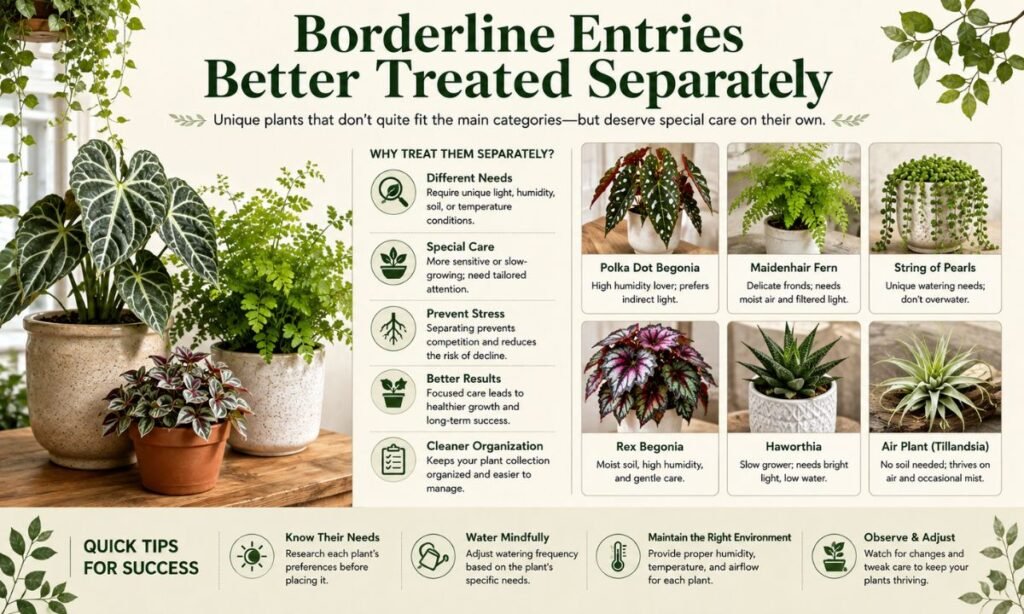
A few names like pickerelweed and ptilotus sit outside typical garden center inventory and deserve their own dedicated research before planting, since availability and care needs vary widely by region.
Final Thoughts
Flowers that start with P offer one of the widest ranges of color, texture, and use found in any single letter category. From classic garden staples like peony and petunia to unusual finds like ptilotus and pineapple lily, there’s a fit for nearly every garden style and skill level.
Whether you’re building a pollinator friendly meadow, filling containers on a patio, or picking stems for a bouquet, this list gives you a solid starting point. Take note of sun needs and bloom season before planting, and you’ll end up with a garden that stays colorful from early spring through the first frost.
Frequently Asked Questions
What is the most popular flower that starts with P?
Peony is widely considered the most popular P flower thanks to its full blooms and long cut flower life.
Are pansies annuals or perennials?
Pansies are typically grown as annuals or short lived perennials, often replanted each cool season.
Which P flowers are best for full sun gardens?
Petunia, poppy, and purple coneflower all perform best with at least six hours of direct sunlight daily.
Can peace lilies grow without sunlight?
Peace lilies tolerate low light well but grow and bloom best in bright, indirect light.
What P flowers work well in bouquets?
Peony, ranunculus, and pincushion flower are top choices for bouquets due to their long vase life.
Do poppies come back every year?
Some poppy varieties are annuals that reseed themselves, while others like Oriental poppy return as true perennials.
Which P flowers attract the most pollinators?
Purple coneflower, poppy, and pentas are especially effective at attracting bees and butterflies to the garden.

Jack Danniel is a flower enthusiast, writer, and experienced SEO expert passionate about creating helpful content.
With years of experience in SEO and content strategy, he shares engaging and informative insights about flowers.
His goal is to make floral information easy to understand while helping readers discover the beauty of nature.